How many Prometheus winners have reached the screen? More than you might realize!


By Michael Grossberg

Of the 104 works of fiction that have won a Prometheus Award, 15 have been adapted into movies (sometimes more than once.)

Plus, two other Prometheus winners were conceived for and originated on screen – one as a feature film and the other as a TV series.

Thus, 17 Prometheus winners can be seen on the large or small screens.

That represents about 15 percent of all the Prometheus-winning works recognized since the award was first presented in 1979.  Not a bad quotient, perhaps, but it certainly would be nice to see more of our recognized novels and stories raise their visibility and thereby find larger audiences.

So which works have reached the screen?

Just for fun or out of curiosity, before reading further, why not visit the Prometheus Awards page listing all the past winners and see how many you can recall that have had film or TV adaptations?

Hint: There’s more than you realize!

Continue reading How many Prometheus winners have reached the screen? More than you might realize!

Kurt Vonnegut’s Prometheus-winning “Harrison Bergeron” recognized for real-world relevance to “millionaires’ tax” debate


By Michael Grossberg

Kurt Vonnegut’s “Harrison Bergeron” is a cautionary and satirical tale warning about the imagined future excesses of radical egalitarianism and attacks on individualism and personal excellence carried to absurd and coercive extremes.

The classic story, inducted in 2019 into the Prometheus Hall of Fame, suddenly seems as relevant as recent headlines about state and federal efforts to impose unprecedented confiscatory taxation on wealthier people.

Challenging the view that everything is or should become property of the State, NR Online writer Andrew Stuttaford invokes Vonnegut’s themes in a perceptive column.

Continue reading Kurt Vonnegut’s Prometheus-winning “Harrison Bergeron” recognized for real-world relevance to “millionaires’ tax” debate


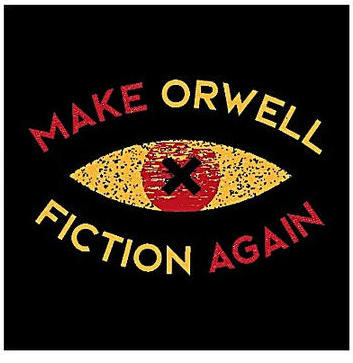
Why we post articles about references in popular culture to Prometheus-winning classics, from Orwell’s 1984 to Anderson’s “The Emperor’s New Clothes”


By Michael Grossberg

Not all literary works that win major awards continue to be widely read and influential, years or decades later. Yet, from Orwell’s Nineteen Eighty-Four to Hans Christian Andersen’s “The Emperor’s New Clothes,” those that do are worth noting, for they often reflect important aspects of our era’s intellectual currents and popular culture.

In that context, the number of Prometheus-winning works that commonly are referenced by prominent columnists, essayists and authors continues to be impressive.

Of the more than 100 novels, stories, films and other works of fantastical fiction that have won a Prometheus award for Best Novel or Best Classic Fiction (our Hall of Fame) since the first prize was presented in 1979, more than a dozen are written about frequently in magazines, newspapers, Substack columns, books or referenced in movies, plays and other realms of popular culture.

Among the many Prometheus-winning authors most commonly written about – sometimes with a purely literary focus but more often used as resonant reference points for 21st century commentary – are George Orwell, Ray Bradbury, Kurt Vonnegut, Ayn Rand, J.RR. Tolkien, Neal Stephenson and Hans Christian Andersen.

Continue reading Why we post articles about references in popular culture to Prometheus-winning classics, from Orwell’s 1984 to Anderson’s “The Emperor’s New Clothes”


Hall of Fame finalist review: “The Trees,” a fantasy-themed rock song by Rush, resonates as cautionary tale

By Michael Grossberg

Even though they’re eligible for nomination, no songs have ever been inducted into the Prometheus Hall of Fame.

Neal Peart, Rush drummer and songwriter of “The Trees.” Credit: Creative Commons

I can’t imagine a good song more deserving of that honor, and that fits the distinctive focus of the Prometheus Awards better, than “The Trees,” a 1978 song by the Canadian rock group Rush.

Continue reading Hall of Fame finalist review: “The Trees,” a fantasy-themed rock song by Rush, resonates as cautionary tale

Columnist Ed West on Eugene Zamyatin, author of the first classic dystopian novel of the 20th century

By Michael Grossberg

When it comes to the birth and development of dystopian literature, Russian dissident writer Eugene (Yevgeny) Zamyatin may have the dubious distinction of being one of the most overlooked novelists of that disturbingly timely and emerging 20th-century genre.

Zamyatin’s We was the first dystopian novel of the 20th century, helping to pave the way for others, most notably George Orwell’s Nineteen Eighty Four and Ayn Rand’s similarly-themed Anthem.

Yet, sadly, references to Zamyatin are rare in today’s culture, media and magazines.

So it’s nice to see an insightful column that not only mentions Zamyatin but offers revealing commentary about his fiction and places him within the historical and literary context of Russia in the early 1900s.

Continue reading Columnist Ed West on Eugene Zamyatin, author of the first classic dystopian novel of the 20th century

Author’s update: HarperCollins has published Mania, two-time Best Novel finalist Lionel Shriver’s alternate-history novel critiquing radical egalitarianism

By Michael Grossberg

Maverick bestselling novelist Lionel Shriver is at it again, skewering popular shibboleths of elite culture and critiquing false ideologies through her imaginative and insightful fiction.

Author Lionel Shriver in 2006 Photo: Walnut Whippet, Creative Commons license

Shriver, recognized twice over the past decade as a Prometheus Best Novel finalist, has written Mania, a new 286-page alternate-history novel published April 9 by HarperCollins Publishers.

The publisher’s description highlights a theme that seems promising from the perspective of the Prometheus Awards:

“With echoes of Philip Roth’s The Human Stain, told in Lionel Shriver’s inimitable and iconoclastic voice, Mania is a sharp, acerbic, and ruthlessly funny book about the road to a delusional, self-destructive egalitarianism that our society is already on.”

Continue reading Author’s update: HarperCollins has published Mania, two-time Best Novel finalist Lionel Shriver’s alternate-history novel critiquing radical egalitarianism

Making ‘em laugh: Which Hall of Fame winners best incorporate comedy?

By Michael Grossberg

Everyone has their favorites among the fiction works that have won the Prometheus Hall of Fame for Best Classic Fiction.

And by everyone, I mean virtually everyone – since at least some of the 46 winning works are enjoyed by libertarians and non-libertarians alike, and by both science fiction/fantasy fans and those who don’t often read that genre.

But how many rank the comedies that high?

Continue reading Making ‘em laugh: Which Hall of Fame winners best incorporate comedy?

God bless you, Mr. Vonnegut – and happy 100th birthday!

By Michael Grossberg

The alien Tralfamadorians surely won’t be the only sentient beings celebrating the 100th anniversary Nov. 11, 2022, of Kurt Vonnegut’s birth.

Kurt Vonnegut in 1972 (Creative Commons license)

Anyone who appreciates a blend of humor with social commentary in novels and stories that often incorporate science fiction should celebrate the memory of one of the most influential and popular American writers and novelists of the 20th century.

Continue reading God bless you, Mr. Vonnegut – and happy 100th birthday!

Liberty vs. equality: International magazine highlights timeless warnings of “Harrison Bergeron,” Vonnegut’s Prometheus-winning fable

By Michael Grossberg

Some Prometheus-winning fiction imagines a better, freer future for humanity, one that libertarian futurists yearn to see come true in some form.

Other Prometheus-winning fiction is more dystopian, offering cautionary warnings about totalitarian tendencies that their authors portray with hopes of preventing them from materializing.

“Harrison Bergeron,” Kurt Vonnegut’s now-classic 1961 short story, which falls into the latter category, satirically but seriously extrapolates the coercive, absurd and even monstrously inhuman possibilities of radical egalitarianism taken to extremes.

Read the Prometheus Blog Appreciation to appreciate why Vonnegut’s story deserved to be recognized by the Libertarian Futurist Society as the 2019 Prometheus Hall of Fame winner.

Overall and at least in theory, it’s a good thing to see outstanding fiction continue to resonate within the broader American and world culture – especially when it’s pro-liberty or anti-authoritarian sf/fantasy and has been recognized through the Prometheus awards.

Unfortunately, “Harrison Bergeron” is becoming all too timely.

Continue reading Liberty vs. equality: International magazine highlights timeless warnings of “Harrison Bergeron,” Vonnegut’s Prometheus-winning fable

Egalitarianism taken to coercive extremes in attacks on excellence: Kurt Vonnegut’s story “Harrison Bergeron,” the 2019 Prometheus Hall of Fame winner

To highlight the Prometheus Awards’ four-decade history and make clear why each winner deserves recognition as anti-authoritarian or pro-freedom, the Libertarian Futurist Society is publishing an Appreciation series of all past award-winners.

Here is an Appreciation for Kurt Vonnegut’s story “Harrison Bergeron,” the 2019 Prometheus Hall of Fame winner for Best Classic Fiction.

By Michael Grossberg
The government’s Handicapper General enforces new constitutional amendments mandating that no one can be stupider, uglier, weaker, slower – or in any way better – than anyone else.

To enforce this authoritarian and radical egalitarian edict, perfectly capable people are forced to accept and wear various disabling devices that handicap their capabilities and basic humanity.

Leave it to the great American novelist Kurt Vonnegut Jr. to come up with such a classic cautionary fable about a dystopian future in the United States in which coercive egalitarianism – a close cousin of progressivism – is taken to such radical and inhuman extremes in a perverse authoritarian revolt against personal excellence.

Continue reading Egalitarianism taken to coercive extremes in attacks on excellence: Kurt Vonnegut’s story “Harrison Bergeron,” the 2019 Prometheus Hall of Fame winner