Here’s the Zoom link to watch the 46th Prometheus Awards ceremony, with speakers Ilya Somin, Travis Corcoran, 2026 winners Dave Freer and J. Franklin Pierce and Aldous Huxley’s grandchildren


By Michael Grossberg

The 46th Prometheus Awards ceremony is shaping up to be one of the most interesting, thought-provoking and exciting in years.

Ten speakers from around the world have been lined up for the roughly hourlong awards show, which will present the two annual categories for Best Novel and Best Classic Fiction (the Prometheus Hall of Fame) plus an occasional Special Award – the first  the first for Young Adult Fiction.

Here is the Zoom link to watch the awards live:

https://us06web.zoom.us/j/87824388418?pwd=CsoznF4wtlLNTYvEotlIpVJkCoGb9I.1

All Libertarian Futurist Society members and other freedom-loving SF/fantasy fans are invited to watch the live Zoom event, which will begin at 10 a.m. Pacific time (1 p.m. Eastern time) on Sunday Aug. 16, 2026.

So who are the 10 presenters, winners and other speakers?
Continue reading Here’s the Zoom link to watch the 46th Prometheus Awards ceremony, with speakers Ilya Somin, Travis Corcoran, 2026 winners Dave Freer and J. Franklin Pierce and Aldous Huxley’s grandchildren


A Pulitzer-winning writer and Aldous Huxley’s two grandchildren to accept Hall of Fame award Aug. 16 for Brave New World

By Michael Grossberg

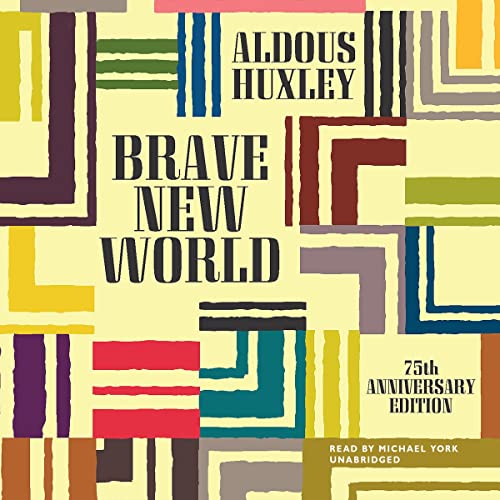
Brave New World, the classic dystopian novel by Aldous Huxley (1894-1963) warning about a future “soft tyranny” under a seemingly benevolent State, will be the 50th work to be inducted into the Prometheus Hall of Fame.

The Libertarian Futurist Society is pleased to announce that Huxley’s two grandchildren Tessa and Trevenan Huxley and Pulitzer-winning author Jack Miles will accept the posthumous award following the keynote speech by Ilya Somin, guest presenter of the Hall of Fame category.

The Huxleys and Miles, co-trustee of the Aldous and Laura Huxley Literary Trust, will deliver acceptance speeches at the 46th Prometheus Awards ceremony, roughly an hourlong live Zoom event beginning at 1 p.m. Sunday (Eastern time) Aug. 16 and open to the public.

Tessa Huxley, Aldous Huxley’s granddaughter (Photo courtesy of Tessa Huxley)

“I was delighted to learn of the honor being bestowed upon my grandfather,” Tessa Huxley said in an email.

“I am pleased that others find Brave New World as important and relevant as I do.  I re-read Brave New World early this year and was really struck by the seductive nature of his imaginary world and that of the USA… In particular, in 2026 where Americans seem endlessly obsessed by consumerism and pleasure seeking and apparently rather proud of it.”

Continue reading A Pulitzer-winning writer and Aldous Huxley’s two grandchildren to accept Hall of Fame award Aug. 16 for Brave New World

Brave New World: Huxley’s 1932 dystopian classic ranks among the oldest works to win the Prometheus Hall of Fame award


By Michael Grossberg

Aldous Huxley’s Brave New World is one of the oldest works to win the  Prometheus Award for Best Classic Fiction.

Published in 1932 by Chatto & Windus, Aldous Huxley’s pioneering dystopian novel has become so well-known around the world that its title has become an emblematic catchphrase signaling the dangers of authoritarianism.

Brave New World is the third-oldest work and the second-oldest novel to be inducted into the Prometheus Hall of Fame. (The roughly hourlong Zoom ceremony, open to the public, is scheduled to begin at 1 p.m. Sunday Aug. 16 (Eastern time), with the Zoom link posted a week or so ahead on the Prometheus Blog.)

Continue reading Brave New World: Huxley’s 1932 dystopian classic ranks among the oldest works to win the Prometheus Hall of Fame award


Aldous Huxley’s Brave New World will be inducted into the Prometheus Hall of Fame in Aug. 16 ceremony

By Michael Grossberg

Brave New World will be inducted this year into the Prometheus Hall of Fame for Best Classic Fiction, based on a vote by LFS members.

With its induction Sunday Aug. 16 during the 46th Prometheus awards ceremony, Aldous Huxley’s classic dystopian novel will be the 50th work to win this annual awards category, first presented in 1983.

Brave New World, ranked in fifth place by Modern Library on its list of the 100 Best Novels in English of the 20th century, continues to be considered among the most influential works of dystopian literature.

Continue reading Aldous Huxley’s Brave New World will be inducted into the Prometheus Hall of Fame in Aug. 16 ceremony

Aldous Huxley’s Prometheus Hall of Fame finalist Brave New World has inspired an acclaimed graphic novel


By Michael Grossberg

A good number of Prometheus-winning works have been adapted into graphic novels, from Ayn Rand’s Anthem and L. Neil Smith’s The Probability Broach to the TV series The Prisoner.

One I discovered recently is Brave New World: A Graphic Novel – which is timely to mention here because Aldous Huxley’s novel is one of this year’s Best Classic Fiction finalists for the next Prometheus Hall of Fame award.

Fred Fordham adapted and illustrated Huxley’s dystopian cautionary tale into a 240-page graphic novel, published in 2022 by Harper.

The Guardian described the graphic novel as “brilliant” in its review.

Continue reading Aldous Huxley’s Prometheus Hall of Fame finalist Brave New World has inspired an acclaimed graphic novel


A guide to Prometheus Awards voting: Check out our reviews of this year’s five Hall of Fame finalists by Blish, Lewis, Huxley, Roberts and Stross


By Michael Grossberg

As a guide to the Prometheus Awards and for the convenience of Libertarian Futurist Society members, the Prometheus Blog has once again published full-length and in-depth reviews of all of this year’s Prometheus Hall of Fame finalists for Best Classic Fiction.

Libertarian Futurist Society members, who have the right to vote to select the annual Best Classic Fiction winner from the finalists, are invited to read our reviews of the five novels selected as 2026 finalists – hopefully, to whet your appetite to read each finalist and vote in this year’s Prometheus Awards.

First published between 1932 and 2003, the five finalists were written by James Blish (The Star Dwellers), C.S. Lewis (That Hideous Strength), Aldous Huxley (Brave New World), Adam Roberts (Salt) and Charles Stross (Singularity Sky).

Other SF/fantasy fans and other libertarians, outside the LFS, also are invited to check out the reviews to better understand how they fit the distinctive dual focus of the Prometheus Awards on both quality and liberty.

Continue reading A guide to Prometheus Awards voting: Check out our reviews of this year’s five Hall of Fame finalists by Blish, Lewis, Huxley, Roberts and Stross


Prometheus Hall of Fame news: Novels by James Blish, Aldous Huxley, C.S. Lewis, Adam Roberts and Charles Stross selected as 2026 finalists

By Michael Grossberg

Fresh titles dominate this year’s slate of just-announced finalists for the next Prometheus Hall of Fame Award for Best Classic Fiction.

This year’s five finalists – first published between 1932 and 2003 – include novels by James Blish (The Star Dwellers), C.S. Lewis (That Hideous Strength), Aldous Huxley (Brave New World), Adam Roberts (Salt) and Charles Stross (Singularity Sky).

James Blish in the 1960s (Creative Commons license)

Blish and Roberts are first-time Hall of Fame nominees, while this is the first time that Huxley’s classic dystopian novel has been recognized as a finalist.

Blish, a Hugo-winning author widely admired in the 1950s and 1960s during the peak of the so-called Golden Age of  modern sf, has never before been nominated for the Prometheus Award – perhaps in retrospect a major omission that at last has been corrected.

Although Huxley’s classic dystopian novel was nominated during the first decade of our awards in the 1980s, this is the first nomination for Brave New World in roughly four decades.

Continue reading Prometheus Hall of Fame news: Novels by James Blish, Aldous Huxley, C.S. Lewis, Adam Roberts and Charles Stross selected as 2026 finalists

Hall of Fame Finalist Review: Aldous Huxley’s Brave New World offers still-timely dystopian vision of a collectivist “soft tyranny” denying individuality, history, culture and art


By Michael Grossberg

Aldous Huxley (Creative Commons license)

British writer-philosopher Aldous Huxley (1894-1963) is best remembered today for writing one of the earliest and most emblematic works of dystopian literature.

His 1932 novel Brave New World continues to be a bestseller and is universally recognized as a modern classic. For example, the Modern Library ranked it number 5 on its list of the 100 Best Novels in English of the 20th century.

Not all dystopian works fit the distinctive focus of the Prometheus Award, but Brave New World more than qualifies – and that’s why I’ve nominated it for the Prometheus Hall of Fame for Best Classic Fiction.

Continue reading Hall of Fame Finalist Review: Aldous Huxley’s Brave New World offers still-timely dystopian vision of a collectivist “soft tyranny” denying individuality, history, culture and art


Economics in Science Fiction: The Specter of Overproduction (from Pohl and Huxley to Heinlein)

By William H. Stoddard

Science fiction has mainly been based on the natural sciences, from astronomy to biology; economics and the other social sciences come on stage less often.

Certainly, social science fiction was one of Isaac Asimov’s three categories of science fiction (along with gadget stories and adventure stories—as TV Tropes puts it, “Man invents car” can be followed by “lectures on how it works,” “gets into car chase,” or “gets stuck in traffic”).

But the premise for social science fiction was commonly a discovery or invention in the natural sciences, whose social and economic consequences are explored. It’s not so common for science fiction to be inspired by an economic theory.

Nonetheless, some theories have been the basis for science fiction stories. Economic issues are a major concern for libertarians; how science fiction deals with such issues is worth exploring.

Continue reading Economics in Science Fiction: The Specter of Overproduction (from Pohl and Huxley to Heinlein)

Orwell’s 1984 vs Huxley’s Brave New World: Which fictional dystopia seems more timely today?

Who had the more prophetic and realistic vision of a dystopian future?

George Orwell? Or Aldous Huxley?

Orwell, most famous for Nineteen Eighty-Four (one of the earliest works inducted into the Prometheus Hall of Fame), was inspired by Stalinist communism in imagining his “hard tyranny” of brute dictatorship.


Huxley, best known for Brave New World, worried that a softer tyranny would ultimately prevail, one more insidious partly because it was more enveloping of both politics and culture and more seductive via a future of mindless pleasures.

Writing for the Institute for Art and Ideas, a British philosophical organization founded in 2008, British university instructor Emrah Atasoy compares Orwell and Huxley’s different dystopian visions in an informed and provocative essay: “Orwell, Huxley and the path to truth: How fiction can help us to understand reality.”

Continue reading Orwell’s 1984 vs Huxley’s Brave New World: Which fictional dystopia seems more timely today?