The Prometheus Young Adult Honor Roll: A reading and holiday gift guide for parents, teenagers and children


By Michael Grossberg

When Libertarian Futurist Society leaders added Young Adult (YA) fiction as an additional category of pro-freedom fantastical fiction that might be recognized with a Special Prometheus Award, quite a few worthy YA works already had won a Prometheus Award.

That’s why the LFS also set up a Prometheus Award Young Adult Honor Roll at the same time – a list that parents, grandparents and others should be aware of when choosing presents for the holidays or birthdays.

After all, what better present for a child or teenager than a good book?

Continue reading The Prometheus Young Adult Honor Roll: A reading and holiday gift guide for parents, teenagers and children


Ayn Rand’s Prometheus Hall of Fame winner Anthem has been adapted into a graphic novel – twice!


By Michael Grossberg

Anthem: The Graphic Novel (2018)

Did you know that Ayn Rand’s Anthem has been adapted into a graphic novel?

If so, did you realize that Rand’s Prometheus-winning ode to individualism, freedom and the rediscovery of the self has actually been adapted twice – with two different graphic novels? (I didn’t.)

The first one was published in 2011; and the second, in 2018. Together, the two versions reflect the continuing appeal and relevance of one of Rand’s earliest works.

Both are interesting to read – and to compare.

Continue reading Ayn Rand’s Prometheus Hall of Fame winner Anthem has been adapted into a graphic novel – twice!


First Anthem, then Red Pawn and Top Secret: Atlas Society publishing graphic novels of Rand’s shorter fiction

By Michael Grossberg

Fans of Ayn Rand, a two-time Prometheus Award-winner, can now appreciate some of her earliest-published fiction through the visually striking and fresh perspective of graphic novels.

The Atlas Society, a nonprofit organization promoting Ayn Rand’s fiction and philosophy, has launched an ambitious long-range project: to commission and create graphic novels of Rand’s stories, screenplays and other fictional works as they fall out of copyright and become available for fresh interpretations.

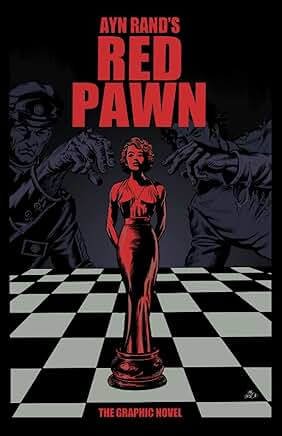
First up was the Society’s graphic novel of Rand’s poetic dystopian novella Anthem, followed by adaptations of Rand’s early screenplays into Red Pawn and Top Secret.

TOP SECRET: THE GRAPHIC NOVEL

Published most recently, Top Secret: The Graphic Novel is based on Rand’s screenplay for a movie about the making of the atomic bomb. The graphic novel adapts Rand’s 16-page outline from Jan. 19, 1946. Continue reading First Anthem, then Red Pawn and Top Secret: Atlas Society publishing graphic novels of Rand’s shorter fiction

Why we post articles about references in popular culture to Prometheus-winning classics, from Orwell’s 1984 to Anderson’s “The Emperor’s New Clothes”


By Michael Grossberg

Not all literary works that win major awards continue to be widely read and influential, years or decades later. Yet, from Orwell’s Nineteen Eighty-Four to Hans Christian Andersen’s “The Emperor’s New Clothes,” those that do are worth noting, for they often reflect important aspects of our era’s intellectual currents and popular culture.

In that context, the number of Prometheus-winning works that commonly are referenced by prominent columnists, essayists and authors continues to be impressive.

Of the more than 100 novels, stories, films and other works of fantastical fiction that have won a Prometheus award for Best Novel or Best Classic Fiction (our Hall of Fame) since the first prize was presented in 1979, more than a dozen are written about frequently in magazines, newspapers, Substack columns, books or referenced in movies, plays and other realms of popular culture.

Among the many Prometheus-winning authors most commonly written about – sometimes with a purely literary focus but more often used as resonant reference points for 21st century commentary – are George Orwell, Ray Bradbury, Kurt Vonnegut, Ayn Rand, J.RR. Tolkien, Neal Stephenson and Hans Christian Andersen.

Continue reading Why we post articles about references in popular culture to Prometheus-winning classics, from Orwell’s 1984 to Anderson’s “The Emperor’s New Clothes”


Heinlein, Anderson, Tolkien, Orwell, Rand, Hoyt, Vinge, Stephenson, Bradbury and Wilson among popular Prometheus-winning authors added as convenient index links on our blog

What do Poul Anderson, Ray Bradbury, Robert Heinlein, James P. Hogan, Sarah Hoyt, Victor Koman, Ursula K. Le Guin, Ken MacLeod, George Orwell, Ayn Rand, L. Neil Smith, Neal Stephenson, J.R.R. Tolkien, Vernor Vinge and F. Paul Wilson have in common?

Robert Heinlein in the 1980s (Photo courtesy of Heinlein Trust)

Some rank high among bestselling and even world famous authors; some are not quite as well known but still have sold millions of copies of their books, and a few are lesser-known writers who deserve a wider readership.

George Orwell. (Creative Commons license)

Yet they’re all writers who have written notable speculative fiction (generally science fiction and/or fantasy) that in different ways championed freedom-loving themes and exposed the evils of authoritarianism.

And all of the above have been recognized for such works by winning Prometheus Awards – some for Best Novel, some for Best Classic Fiction and several for both annual award categories.

Continue reading Heinlein, Anderson, Tolkien, Orwell, Rand, Hoyt, Vinge, Stephenson, Bradbury and Wilson among popular Prometheus-winning authors added as convenient index links on our blog

Economics in science fiction: Aladdin’s Lamps, technocracy and “post-scarcity”

By William H. Stoddard

Science fiction in recent decades has included an extensive exploration of an economic idea, or at least an economic term: The concept of scarcity. In a peculiarly science-fictional dialectical move, this exploration takes place by assuming the absence of scarcity and asking what follows from it.

The late Iain M. Banks is well known for making “post-scarcity” a premise of his Culture series, for example. In effect, this idea makes advanced technology a kind of djinn that can grant human wishes.

Similar ideas actually have a long history in science fiction.


Continue reading Economics in science fiction: Aladdin’s Lamps, technocracy and “post-scarcity”

2024 Prometheus awards: Although “time… is intolerant,” the Hall of Fame “worships language” that has attained longevity, LFS President says

Editor’s note: As part of our coverage of the 44th Prometheus Awards ceremony, the Prometheus Blog is posting a variety of reports and the full texts of all speeches – including LFS President William H. Stoddard’s overview of the history and focus of the Prometheus Hall of Fame for Best Classic Fiction.

By William H. Stoddard

The Libertarian Futurist Society began giving Hall of Fame Awards in 1982, with awards to two libertarian classics: Ayn Rand’s Atlas Shrugged, a key work for the emergence of the modern day libertarian movement, and Robert Heinlein’s The Moon Is a Harsh Mistress, the foundational work of libertarian science fiction and still one of its best. 

In recent years, as earlier Prometheus Award nominees have become old enough to be regarded as classics, we’ve adopted a requirement that Hall of Fame nominees must have been published at least twenty years ago, and must not have won the Best Novel award.

Continue reading 2024 Prometheus awards: Although “time… is intolerant,” the Hall of Fame “worships language” that has attained longevity, LFS President says

Check out the Atlas Society’s animated Atlas Shrugged video

Have you seen the Atlas Society’s animated video highlighting Ayn Rand’s Atlas Shrugged?

The video, which has received more than 600,000 viewings on You Tube, is billed as the “first-of-its-kind book trailer for Rand’s masterpiece novel.”

Continue reading Check out the Atlas Society’s animated Atlas Shrugged video

Best Novel finalist review: Gordon Hanka’s provocative God’s Girlfriend explores coercion, consent, masculinity, femininity and basic instincts

By Eric S. Raymond and Michael Grossberg

Subversive and satirical, God’s Girlfriend challenges some of the deepest assumptions of today’s politics and culture.

One of five 2024 Prometheus Best Novel finalists, Gordon Hanka’s provocative sci-fi novel raises thorny questions about ethics, religion, coercion and consent, the nature of masculinity and femininity and the use of weapons of mass destruction.

The 540-page novel offers a taboo-shattering mixture of unorthodox libertarian provocations and Christian eschatology amid a life-or-death clash of two cultures: Earth humans and Wyrms, human refugees from another planet.

Subtitled “Sci-Fi that should not be published,” the novel blends SF and fantasy tropes from spaceships and advanced weaponry to the apparently supernatural, including Jesus’ Second Coming.

The story revolves around the rising tensions, conflicts and increasing likelihood of nuclear war between Earth governments, desperate to preserve their power, and the Wyrms, genetically modified to resist disease and political-psychological control.

As the failing nation-states of Earth threaten nuclear apocalypse to wipe out the Outback-style beachhead of the Wyrms in Australia, all hell breaks loose. So does heaven, with the Second Coming of God in the unexpectedly modern form of Joshua, who has his own notions of good and evil and shifting ideas about which side should survive.

Continue reading Best Novel finalist review: Gordon Hanka’s provocative God’s Girlfriend explores coercion, consent, masculinity, femininity and basic instincts

Columnist Ed West on Eugene Zamyatin, author of the first classic dystopian novel of the 20th century

By Michael Grossberg

When it comes to the birth and development of dystopian literature, Russian dissident writer Eugene (Yevgeny) Zamyatin may have the dubious distinction of being one of the most overlooked novelists of that disturbingly timely and emerging 20th-century genre.

Zamyatin’s We was the first dystopian novel of the 20th century, helping to pave the way for others, most notably George Orwell’s Nineteen Eighty Four and Ayn Rand’s similarly-themed Anthem.

Yet, sadly, references to Zamyatin are rare in today’s culture, media and magazines.

So it’s nice to see an insightful column that not only mentions Zamyatin but offers revealing commentary about his fiction and places him within the historical and literary context of Russia in the early 1900s.

Continue reading Columnist Ed West on Eugene Zamyatin, author of the first classic dystopian novel of the 20th century