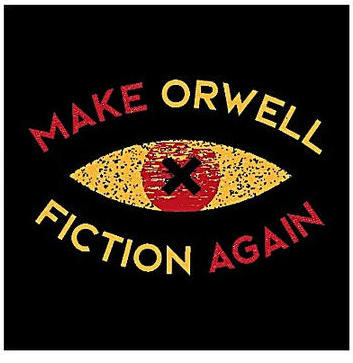
Investigative journalist Matt Taibbi inspired by Bradbury’s Prometheus-winning novel to create “Project 451”


By Michael Grossberg

One of the many Prometheus-winning works that continues to be widely read and referenced in popular culture for its enduring dramatic power and themes is Fahrenheit 451.

Inducted in 1984 into the Prometheus Hall of Fame, Ray Bradbury’s civil-libertarian, anti-censorship and pro-reading novel envisions a dystopian future in which “firemen” burn books and literacy is suppressed, along with any memory of great literature.

While many find the novel relevant to our era, in which both free speech and the reading of books often seem threatened or in decline, few go as far as investigative reporter and media critic Matt Taibbi or as fervently.

Continue reading Investigative journalist Matt Taibbi inspired by Bradbury’s Prometheus-winning novel to create “Project 451”


The Prometheus Awards and the Forry award for lifetime achievement: Cherryh, Anderson, Heinlein, Pratchett, Ellison among 13 authors recognized by both


By Michael Grossberg

Just as the Prometheus Awards overlaps to some extent with the Hugo and Nebula wards in terms of the works and writers recognized, our list of Prometheus-winning writers overlaps with the Forry Awards.

C.J. Cherryh, who co-wrote the 2020 Prometheus Best Novel winner (Alliance Rising) with her partner Jane S. Fancher, is the 13th Prometheus winner to also be recognized in the Forry awards.

C.J. Cherryh (File photo)

Cherryh recently won the 2025 Forrest J Ackerman Award for Lifetime Achievement given by the members of the Los Angeles Science Fantasy Society. (See our previous post about Cherryh’s latest honor.)

It’s interesting to see what writers have been recognized by both the LASFS, the world’s oldest continuously active science fiction and fantasy club, and the Libertarian Futurist Society (LFS), established in 1982 to sustain the Prometheus Awards.

Such broad cross-recognition should be another reminder of just how embedded libertarian and anti-authoritarian ideas and values are within our popular culture – and have been, for generations, even amid various socio-economic developments and political trends, both positive and negative.

So if Cherryh is the 13th Prometheus winner to be recognized with a Forry award, who else is on that illustrious cross-checked list?

Continue reading The Prometheus Awards and the Forry award for lifetime achievement: Cherryh, Anderson, Heinlein, Pratchett, Ellison among 13 authors recognized by both


Bradbury, Heinlein, Le Guin, Vonnegut stories ranked among the 26 best SF stories by New Scientist


By Michael Grossberg

E.M. Forster isn’t the only Prometheus-recognized author on New Scientist’s intriguing list of the 26 best science fiction/fantasy stories of all time.

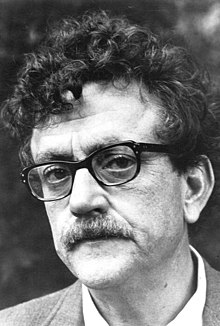
Kurt Vonnegut in 1972 (Creative Commons license)

Although Forster’s “The Machine Stop” is the only story on the list specifically inducted into the Prometheus Hall of Fame, as described in a recent Prometheus blog post, several other enduring authors have stories on the magazine’s list – just not the ones our award has recognized.

Ursula K. Le Guin (Creative Commons license)

Among those writers: Ray Bradbury, Robert Heinlein, Ursula K. Le Guin and Kurt Vonnegut.

It’s interesting to see which of their stories are recognized by the magazine, and why.

Continue reading Bradbury, Heinlein, Le Guin, Vonnegut stories ranked among the 26 best SF stories by New Scientist


Why we post articles about references in popular culture to Prometheus-winning classics, from Orwell’s 1984 to Anderson’s “The Emperor’s New Clothes”


By Michael Grossberg

Not all literary works that win major awards continue to be widely read and influential, years or decades later. Yet, from Orwell’s Nineteen Eighty-Four to Hans Christian Andersen’s “The Emperor’s New Clothes,” those that do are worth noting, for they often reflect important aspects of our era’s intellectual currents and popular culture.

In that context, the number of Prometheus-winning works that commonly are referenced by prominent columnists, essayists and authors continues to be impressive.

Of the more than 100 novels, stories, films and other works of fantastical fiction that have won a Prometheus award for Best Novel or Best Classic Fiction (our Hall of Fame) since the first prize was presented in 1979, more than a dozen are written about frequently in magazines, newspapers, Substack columns, books or referenced in movies, plays and other realms of popular culture.

Among the many Prometheus-winning authors most commonly written about – sometimes with a purely literary focus but more often used as resonant reference points for 21st century commentary – are George Orwell, Ray Bradbury, Kurt Vonnegut, Ayn Rand, J.RR. Tolkien, Neal Stephenson and Hans Christian Andersen.

Continue reading Why we post articles about references in popular culture to Prometheus-winning classics, from Orwell’s 1984 to Anderson’s “The Emperor’s New Clothes”


Celebrating the 45th Prometheus Awards: LFS President William H. Stoddard’s speech introducing the Prometheus Hall of Fame and guest presenter David Friedman

Libertarian Futurist Society president William H. Stoddard emceed the 45th Prometheus Awards and introduced the Prometheus Hall of Fame category for Best Classic Fiction, which was presented by libertarian luminary and Prometheus-nominated fantasy novelist David Friedman.

LFS President William H. Stoddard (Photo by Carol Stoddard)

The August 30, 2025 awards ceremony, presented live via Zoom on August 30, 2025, was recorded and later posted on Youtube. Here is the text of Stoddard’s speech:

By William H. Stoddard

The Prometheus Hall of Fame award was established in 1983.

Initially we gave it to two classic works of libertarian science fiction each year. Our first two winners were virtually inevitable choices: Robert A. Heinlein’s The Moon Is a Harsh Mistress, the book that established libertarian science fiction as a recognized genre, and Ayn Rand’s Atlas Shrugged, the fictional treatment of libertarian ideas that brought large numbers of people into what became the libertarian movement.

The next year’s award went to two classic dystopias, George Orwell’s 1984 and Ray Bradbury’s Fahrenheit 451.

Since then we’ve settled down to one winner a year, and opened the award not merely to novels but to work in any narrative or dramatic form. Such works become eligible 20 years after their original publication.

To present this year’s award, we have the honor of having David Friedman as a guest speaker.

Continue reading Celebrating the 45th Prometheus Awards: LFS President William H. Stoddard’s speech introducing the Prometheus Hall of Fame and guest presenter David Friedman

The Ray Bradbury interview, part 2: How the master of the magical and mysterious developed his writing craft


By Michael Grossberg

Here is part two of my feature profile of the late great Ray Bradbury, first published in 1985 and based on my interview and conversations with the Prometheus-winning author:

Bradbury’s playful spirit and suspenseful stories have endeared him to legions of fans.

Next fall (1986), over the Labor Day weekend, an estimated 6,000 fans will gather in Atlanta during the 44th annual World Science Fiction Convention to personally thank the sprightly 65-year-old man who has always remained a child at heart.

It’s about time, because Bradbury’s recognition as a Worldcon’s Guest of Honor was long overdue.

Considering Bradbury’s large body of work and vast appeal, it would not be much of an exaggeration to say that Bradbury owns the “B” in science fiction’s classic alphabet of first-rank authors. (For those not in the know, the “A” is owned by Isaac Asimov and the “C” by Arthur Clarke.)

Think of science fiction’s Golden Age, and one immediately thinks of the author of The Martian Chronicles, The Illustrated Man, The Golden Apples of the Sun, The Halloween Tree, I Sing the Body Electric! and, his acknowledged masterpiece, Fahrenheit 451.

Continue reading The Ray Bradbury interview, part 2: How the master of the magical and mysterious developed his writing craft


Remembering a literary giant on his birthday: My interview with Ray Bradbury

By Michael Grossberg

Ray Bradbury in 1975 (Creative Commons license)

Ray Bradbury was born Aug. 22, 1920 and lived a creative and productive life until 2012.

In honor of Bradbury’s birthday, the Prometheus Blog is reprinting an interview I did with the acclaimed and bestselling storyteller in the mid-1980s – one of the interviews I found most stimulating and satisfying during my six-decade career as a journalist, arts reporter and critic.

Among the questions I asked Bradbury:
What inspired him to write his classic novel Fahrenheit 451, later inducted into the Prometheus Hall of Fame?

Why did it take him only two weeks to write?
Why and how did the legendary storyteller rewrite Network, an Academy Awardwinner for Best Picture – after its release?

And perhaps most lasting in his reply, what lessons from his own against-the-odds life did Bradbury offer other writers?

Continue reading Remembering a literary giant on his birthday: My interview with Ray Bradbury

Male vs. female readers, and science fiction vs. fantasy: Is modern publishing targeting one more than the other? 


By Michael Grossberg

It’s an old cliche: Men prefer science fiction; women prefer fantasy. (Of course, that’s a half-truth at best: After all, many men enjoy fantasy, and many women, science fiction.)

Left to right: The planets Mars, Earth and Venus (File photo)

Yet, if men are mostly from Mars and women are mostly from Venus, how is today’s publishing world appealing to both?

Not very well, Kristin McTiernan argues on her Fictional Influence website and blog.

When McTiernan posted a video about the absence of contemporary men’s fiction, it went viral.

“I struck a nerve that resonated far beyond my usual audience,” McTiernan wrote on her Fictional Influence website.

“The comment section flooded with responses from men who felt invisible in today’s publishing landscape – readers hungry for stories that spoke to their experiences (from their perspective) without apology.”

Continue reading Male vs. female readers, and science fiction vs. fantasy: Is modern publishing targeting one more than the other? 


Forster, Bradbury, Heinlein, Le Guin, Vonnegut stories ranked among the 26 best SF stories by New Scientist


By Michael Grossberg

Several Prometheus-recognized authors are included on New Scientist’s intriguing list of the 26 best science fiction/fantasy stories of all time.

Ray Bradbury (Creative Commons license)

E.M. Forster’s “The Machine Stops” is the only story on the magazine’s list previously inducted into the Libertarian Futurist Society’s Prometheus Hall of Fame. Yet, several other enduring and Prometheus-winning authors have classic stories on the magazine’s list – just not the ones our award has recognized.

Among them: Ray Bradbury, Robert Heinlein, Ursula K. Le Guin and Kurt Vonnegut.

It’s interesting to see which of their stories are recognized by the magazine, and why.

Continue reading Forster, Bradbury, Heinlein, Le Guin, Vonnegut stories ranked among the 26 best SF stories by New Scientist


Heinlein, Anderson, Tolkien, Orwell, Rand, Hoyt, Vinge, Stephenson, Bradbury and Wilson among popular Prometheus-winning authors added as convenient index links on our blog

What do Poul Anderson, Ray Bradbury, Robert Heinlein, James P. Hogan, Sarah Hoyt, Victor Koman, Ursula K. Le Guin, Ken MacLeod, George Orwell, Ayn Rand, L. Neil Smith, Neal Stephenson, J.R.R. Tolkien, Vernor Vinge and F. Paul Wilson have in common?

Robert Heinlein in the 1980s (Photo courtesy of Heinlein Trust)

Some rank high among bestselling and even world famous authors; some are not quite as well known but still have sold millions of copies of their books, and a few are lesser-known writers who deserve a wider readership.

George Orwell. (Creative Commons license)

Yet they’re all writers who have written notable speculative fiction (generally science fiction and/or fantasy) that in different ways championed freedom-loving themes and exposed the evils of authoritarianism.

And all of the above have been recognized for such works by winning Prometheus Awards – some for Best Novel, some for Best Classic Fiction and several for both annual award categories.

Continue reading Heinlein, Anderson, Tolkien, Orwell, Rand, Hoyt, Vinge, Stephenson, Bradbury and Wilson among popular Prometheus-winning authors added as convenient index links on our blog