Why leading libertarian, economist and novelist David Friedman admires the science fiction of Karl K. Gallagher


By Michael Grossberg

Leading libertarian thinker and economist David D. Friedman counts himself a fan of science-fiction writer Karl K. Gallagher.

David Friedman (Photo provided by Friedman)

In a fascinating question and answer session at the end of the 45th Prometheus Awards ceremony, Friedman singled out just a few science fiction authors for praise – including Vernor Vinge, Robert Heinlein, C.J. Cherryh, Lois McMaster Bujold and Gallagher.

Karl K. Gallagher (2024 photo courtesy of Gallagher)

Gallagher’s novels are “well-written and interesting,” said Friedman, himself a Prometheus-nominated fantasy novelist.

Friedman, nominated for Harald, also has written Salamander, which he views as his favorite and best-written novel, and Brothers, a sequel to Harald.

Continue reading Why leading libertarian, economist and novelist David Friedman admires the science fiction of Karl K. Gallagher


Orwell’s Prometheus-winning Animal Farm being adapted into an animated film


By Michael Grossberg

One of the best known and most enduring Prometheus Hall of Fame winners for Best Classic Fiction has finally been adapted into an animated film.

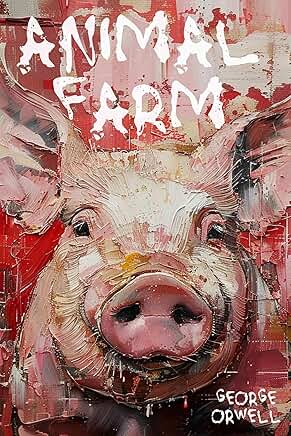
Actor-director Andy Serkis has worked for years to bring to the screen a new animated film version of George Orwell’s fable Animal Farm, a Prometheus Hall of Fame inductee for Best Classic Film. Serkis’ film, which has been screened overseas at a film festival, is not yet available to watch in the United States.

Orwell’s cautionary and satirical fable focuses on a group of anthropomorphic farm animals who rebel against their human farmer, hoping to achieve a fully egalitarian society where all the animals are equal. Ultimately, the rebellion is betrayed, with a pig named Napoleon becoming dictator of the farm, which ends up in a far worse state than before.

Continue reading Orwell’s Prometheus-winning Animal Farm being adapted into an animated film


The Special Prometheus Award for YA fiction isn’t well-known yet, but that could change with the nomination of Dave Freer’s Storm-Dragon


By Michael Grossberg

Many publishers and authors may not be aware of the newest category of Special Prometheus Awards, set up to recognize Young Adult (YA) fiction. Even some Libertarian Futurist Society members may be unaware of the award, only added as a possibility a few years ago.

Yet, that could be about to change, with the recent nomination of Dave Freer’s YA novel Storm-Dragon for a Special Award.

Continue reading The Special Prometheus Award for YA fiction isn’t well-known yet, but that could change with the nomination of Dave Freer’s Storm-Dragon


The newest Prometheus Award: A Special Award for Young Adult fiction – and why it’s important to encourage younger generations to read books

By Michael Grossberg

Did you know that Young Adult novels are eligible for a Special Prometheus Award?

In the broad realm of fantastical fiction, Young-Adult or YA novels have had and continue to have a special and honored place.

Just recall how much of the Golden Age of modern SF was YA books for teenagers or so-called “juvenile fiction” for children or middle-grade readers, including many of Robert Heinlein’s early bestsellers, such as Citizen of the Galaxy or Red Planet, both inducted into the Prometheus Hall of Fame for Best Classic Fiction.

That’s a key reason why the Libertarian Futurist Society decided several years ago to set up a process to begin recognizing eligible and worthy YA novels with a Special Prometheus Award – and why we invite our members, as well as publishers and authors, to bring eligible YA works to our attention.

Continue reading The newest Prometheus Award: A Special Award for Young Adult fiction – and why it’s important to encourage younger generations to read books

What leading libertarian theorist and novelist David Friedman thinks of Lois McMaster Bujold, L. Neil Smith, J. Neil Schulman, Robert Heinlein and other Prometheus-winning authors


By Michael Grossberg

David Friedman (Creative Commons license)

David Friedman, a guest presenter at the 45th Prometheus Awards show, is a regular reader of science fiction and fantasy – and the prominent economist and leading libertarian theorist has been influenced in his thinking by several Prometheus-winning authors.

So it’s interesting to hear Friedman’s views on a variety of sf/fantasy writers, which he shared in response to questions at the end of the Aug. 30, 2025, awards ceremony.

In addition to Poul Anderson (the 2025 Hall of Fame winner for Orion Shall Rise), Robert Heinlein, Jerry Pournelle and Vernor Vinge (Prometheus-winning writers that Friedman discussed during his main speech), Friedman offered comments and insights on the novels of Prometheus winners Lois McMaster Bujold, L. Neil Smith, J. Neil Schulman, C.J. Cherryh (highlighted in a previous blog), Heinlein and other sf/fantasy writers.

Continue reading What leading libertarian theorist and novelist David Friedman thinks of Lois McMaster Bujold, L. Neil Smith, J. Neil Schulman, Robert Heinlein and other Prometheus-winning authors


Sequels, part 11: Unlike literary sequels, movie sequels and genre films don’t get as much respect at the Oscars, but that may be changing


By Michael Grossberg

Movie sequels seem to be more common and more popular than ever in the 21st century, often dominating at the box office. Yet, they just don’t get as much respect or awards recognition as literary sequels.

Far fewer sequels have won Academy Awards than have been recognized by science fiction and fantasy’s Hugo and Prometheus awards.

Just consider how few movie sequels have won the Oscar for Best Picture compared to how often sequel novels win a top SF/fantasy award.

Within the 46-year history of the Prometheus Awards, 194 of the 505 novels nominated within the Best Novel category have been sequels – and 11 have gone on to win.

Meanwhile, as recently reported here, nine sequel novels have won the Best Novel category in the 72-year history of the Hugo Awards, voted by members of the World Science Fiction Society and presented annually at the Worldcon.

Yet, in the 97 years that the Academy Awards have been presented, only two movie sequels have won Best Picture: The Godfather Part II and The Lord of the Rings: The Return of the King.

Intriguingly, both movies were key parts of the only trilogies or series to have three films nominated for Best Picture, perhaps partly reflecting the stature and impact of the overall effort.

And perhaps coincidentally, both movies dramatize libertarian and classical-liberal themes about the temptations and abuses of power.

Continue reading Sequels, part 11: Unlike literary sequels, movie sequels and genre films don’t get as much respect at the Oscars, but that may be changing


Sequels, part 10: Like the Prometheus Awards, the Hugo awards often recognize sequels – including many of the same novels and authors

By Michael Grossberg

Within the 46-year history of the Prometheus Awards, 194 of the 505 novels nominated within the Best Novel category have been sequels, as previously reported – and 11 have gone on to win. Yet, the Prometheus Awards are not the only science fiction awards that often recognize sequels.

Quite a few have been honored by the Hugo Awards, voted by members of the World Science Fiction Society and presented annually at Worldcons.

By my count, the Hugos have honored sequels nine times in the Best Novel category. Interestingly, quite a few of those authors also have been recognized in the Prometheus Awards – including Lois McMaster Bujold, Orson Scott Card, C.J. Cherryh and Vernor Vinge. In several cases, both awards have recognized writers for the same works.

This overview of such recognition reminds us of the frequent overlap between the Hugos and the Prometheus awards while shedding light on the popularity and appeal of sequels.

Continue reading Sequels, part 10: Like the Prometheus Awards, the Hugo awards often recognize sequels – including many of the same novels and authors

Sequels, part 9: By the numbers, Prometheus Awards history is full of Best Novel sequels

By Michael Grossberg

Throughout the 46-year history of the Prometheus Award, 505 novels have been nominated for Best Novel.

That’s a surprisingly large number, at least to me – and a cumulative total that I don’t believe has been calculated and reported before, or at least not in many years.

Yet, when I counted them up recently, I was even more surprised by the number of Best Novel nominees that turn out to be sequels. (Quite a few were hard to identify as sequels, by the way, until I researched each title – with some so obscure, and not immediately recognizable as sequels when nominated and read by Prometheus judges and LFS members, because many work fine as stand-alone stories without any obvious indications of previous works.)

Can you guess how many Best Novel nominees have been sequels?

Continue reading Sequels, part 9: By the numbers, Prometheus Awards history is full of Best Novel sequels

Celebrating the 45th Prometheus Awards: Economist and novelist David Friedman on Anderson, Heinlein, Vinge and how science fiction influenced the development of his ideas


David D. Friedman added excitement and intellectual stimulation as the guest presenter at the 45th Prometheus Awards ceremony.

David Friedman (Photo provided by Friedman)

A leading libertarian theorist (The Machinery of Freedom), economist (Price Theory: An Intermediate Text) and law-and-economics professor (Law’s Order: What Economics Has to Do with Law and Why It Matters), David is also a Prometheus-nominated sf/fantasy novelist (Harald, Salamander, Brothers).

Friedman presented the Prometheus Hall of Fame category for Best Classic Fiction during the Aug. 30 ceremony. Here is the text of his speech, which followed an introduction by LFS President William (Bill) Stoddard.

By David D. Friedman

Bill mentioned my friend Vernor Vinge, who is in part responsible for my writing my second novel.

I described to him my idea for that and for the alternative, a sequel to my first novel (Harald, a 2007 Prometheus Best Novel nominee). He thought Salamander would more interesting, so I wrote it. He was right.

I thought I’d start by saying a little about what I’ve learned relevant to libertarianism from science fiction.

As some of you may know, Vernor’s story “The Ungoverned” (inducted in 1994 into the Prometheus Hall of Fame) is about a stateless society, modeled on my ideas, being invaded by an adjacent state.

Seeing that society through the eyes of a novelist rather than an economist showed me things about it that would not have occurred to me….

Continue reading Celebrating the 45th Prometheus Awards: Economist and novelist David Friedman on Anderson, Heinlein, Vinge and how science fiction influenced the development of his ideas


The deep connection between literacy and liberty, and our gratitude to LFS members who read and judge our annual awards

“Back in Homer’s day, people lived within an oral culture, then humans slowly developed a literate culture. Now we seem to be moving to a screen culture. Civilization was fun while it lasted.” – David Brooks

By Michael Grossberg

Liberty and literacy.

Both are admirable goals and crucial civilized values – and something to respect and remember as we celebrate Independence Day on July 4.

Both are difficult to achieve consistently and sustain over generations. And both, in my view, are deeply connected. In the long run, one may not be possible without the other.

Whether one studies history or philosophy, it becomes clear that the spread of literacy and the spread of liberty are deeply interwoven – and perhaps inextricably intertwined.

In the 21st century, when millions of people average three hours or more on their smartphones daily, most people claim they don’t have time to read. That’s a shame – and perhaps also a long-range problem for our civilization.

Certainly, reading is necessary to educate oneself in liberty and the liberal arts – and crucial to the Prometheus Awards.

While reading can be deeply rewarding, it’s also time-consuming, which is why the Libertarian Futurist Society wishes to express its gratitude to all of this past year’s LFS members and Prometheus Awards judges.

Continue reading The deep connection between literacy and liberty, and our gratitude to LFS members who read and judge our annual awards