
Who is Ilya Somin?

Somin, our keynote speaker at the upcoming 46th Prometheus Awards ceremony is one of today’s most interesting and impactful libertarian thinkers and authors. That should become evident at the roughly hourlong ceremony, which will begin at 1 p.m. Sunday Aug. 16, 2026 (Eastern time) and will be open to the public on Zoom.
A lifelong science-fiction fan who’s written for the former Prometheus quarterly, Somin is perhaps most widely known as a Cato Institute scholar and George Mason University law professor.
But Somin has many fascinating facets to his life and career – and recently shared “16 fun facts” about himself on Reason magazine’s legal- and individual-rights-issues blog, The Volokh Conspiracy.
In the process, Somin plugged his upcoming Prometheus-ceremony speech, and linked to our March blog post announcing him as our keynote speaker.
As Somin explained in his fact #15:
“I am a longtime science fiction and fantasy fan, and have a long list of publications and blog posts on various issues related to the politics of those genres. This hasn’t done much to advance my academic career. But it did once get me a speaking invitation to go to Australia! This year, I’m going to be the presenter/keynote speaker at the Libertarian Futurist Society’s annual Prometheus Award ceremony.”
 LIBERTARIANISM AND SCIENCE FICTION
A good idea of Somin’s critical and sympathetic approach to the fantastical genres can be gleaned from reading his excellent essay on “Libertarianism and Science Fiction,” published in 2011 in our Prometheus print quarterly.
Among the themes Somin covered in his article, which he plans to update and amplify in his speech, are “Why the Politics of Science Fiction Matters,” “The Prevalence of Libertarian Ideas in the Genre,” and “Why Science Fiction is So Libertarian.”
“I plan to focus on those themes, but updated to take account of more recent developments,” Somin said.
SOMIN AND THE SUPREME COURT
Somin was most recently in the news because of his impact on a major Supreme Court 2026 ruling about tariffs.
His 2025 blog post, detailing how challenging Trump’s tariffs under the non delegation and major questions doctrines might prevail at the Supreme Court based on their recent precedents, played a pivotal role in the court’s 6-3 decision ruling that the International Emergency Economic Powers Act does not authorize tariffs.

As Somin explained in his fact #16:
“After becoming a career academic, I did not expect to ever do any significant litigation. As the saying goes, those who cannot do, teach! But the litigation that led to the invalidation of Trump’s massive IEEPA tariffs originated in a blog post I wrote in February 2025.
“Jeff Schwab of the Liberty Justice Center contacted me about it, and we eventually agreed I would work with them on a case pursuing the ideas I laid out….
“After almost a year of litigation and two lower court wins the Supreme Court ruled in our favor. We were eventually joined by prominent Supreme Court litigators Michael McConnell and Neal Katyal, and it was Katyal who did the oral argument before the Supreme Court. But the blog post got things started.”
Most recently, Axios, the American quick-read news website, highlighted Somin again in a July news note about the latest tariff threat by the U.S. administration against Canada, using a never-before-tested trade law provision from the 1930 Smoot-Hawley Tariff Act as its rationale.
“What to watch: Trade lawyers suggest the latest Canadian tariffs are also likely to face legal scrutiny — that is, if they take effect.
“Ilya Somin — who helped successfully challenge President Trump’s International Emergency Economic Powers Act tariffs — wrote that Congress ‘superseded’ Section 338 through later trade legislation, leaving it without independent authority to impose new tariffs.”
IDEAS, THE ARTS AND CULTURE
Of course, in his Prometheus Awards keynote speech, Somin will be focusing on science fiction, rather than the Supreme Court, and exploring the realm of ideas, the arts and culture, rather than partisan politics.
To whet your appetite to watch Somin’s speech and the 46th Prometheus ceremony, here are two excerpts from his Prometheus-quarterly essay:
“Libertarianism is better represented in science fiction and fantasy than in any other literary genre. From Robert Heinlein to the present day, libertarian writers have been among the leaders in the field. Even many genre writers who are not self-consciously libertarian have often made use of libertarian themes in their work.
“While there is no definitive survey data on the subject, libertarian readers also seem more likely to be attracted to science fiction and fantasy than other genres. Historians of the movement routinely emphasize the role of science fiction works in helping to inspire it. Ayn Rand, probably the most widely read libertarian writer of modern times, included science fictional elements in her most famous novels, including Atlas Shrugged,” Somin wrote.
WHY IS SF MORE LIBERTARIAN THAN OTHER GENRES?
“Why is science fiction so much more libertarian than other genres? The answer matters both to people interested in the genre and students of political ideology. I will try to explain both the reasons why science fiction is unusually libertarian and the reasons why it matters.”
Farther down in his insightful essay – worth reading in full – Somin describes the many authors and areas in SF/fantasy where libertarian themes and undercurrents surface, including in works by authors who do not identify as libertarians.

“Science fiction and fantasy have long had a much greater libertarian presence than any other literary genres. Heinlein, one of the founding fathers of modern science fiction, was self-consciously libertarian. Several of his books incorporate libertarian, antigovernment themes. Other prominent, explicitly libertarian science fiction writers include Larry Niven, David Brin, and Vernor Vinge,” Somin wrote.
(Editor’s note: Niven won the 1992 Prometheus Award for Best Novel for co-writing Fallen Angels with Jerry Pournelle and Michael Flynn.

Vinge, who died in 2024, was a two-time Best Novel winner for Marooned in Realtime and A Deepness in the Sky, and a two-time Hall of Fame winner for his stories “The Ungoverned” and “True Names.”
Brin, who wrote “Confessions of a Cheerful Libertarian” in 2000 for the Prometheus quarterly, was a 1988 Prometheus Best Novel finalist for The Uplift War, the sequel to his Hugo- and Nebula-winning novel Startide Rising and part of his acclaimed six-novel Uplift Universe series.)

“There is also a much larger number of writers who do not think of themselves as libertarian, but nonetheless have strong libertarian overtones to their work, especially in taking a skeptical view of government power,” Somin wrote.
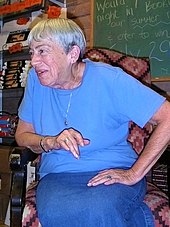
“Ursula Le Guin, one of the most influential science writers of the last forty years, is a left-wing anarchist whose antigovernment views are reflected in her work. The same can be said, to a lesser extent, for many other nonlibertarian science fiction writers.”
LIBERTARIAN PATTERNS IN FANTASY
“Similar patterns are also prevalent in fantasy literature, where recent work by George R.R. Martin, Joe Abercrombie, Daniel Abraham, and many others has taken a highly critical view of state power.
“In both Martin’s popular Song of Ice and Fire series and Abercrombie’s First Law series, nearly all of the contending governments and rulers seem to be repressive in nature, and all are portrayed as structurally flawed. That contrasts with some, more traditional heroic fantasy, which ascribes the flaws of government to individual bad rulers and implies that government would function well if only the right people were in power. Obviously, the former approach is much more libertarian than the latter.
“Over the last decade, the two science fiction or fantasy series that have had the greatest cultural impact have been J.R.R. Tolkien’s classic Lord of the Rings (which was made into a highly successful series of movies), and J.K. Rowling’s Harry Potter series. Both series have very strong libertarian elements….”

WATCH THE 46TH PROMETHEUS AWARDS!
Stay tuned to the Prometheus Blog for more posts about the variety of other impressive speakers at this year’s Prometheus Awards ceremony – including Best Novel winner J. Kenton Pierce (A Kiss for Damocles); and two-time Prometheus winner Travis Corcoran, who will present the first Special Prometheus Award for Young Adult Fiction to Dave Freer for Storm-Dragon; and a Pulitzer-winning author and Aldous Huxley’s two grandchildren accepting the Prometheus Hall of Fame award for Huxley’s Brave New World.
Now scheduled to begin at 10 a.m. (Pacific time) Sunday Aug. 16 (1 p.m. Eastern Time, the roughly hourlong Zoom event will be emceed by LFS President William H. Stoddard and will be open to the public.
Here is the Zoom link to watch the awards live:
https://us06web.zoom.us/j/87824388418?pwd=CsoznF4wtlLNTYvEotlIpVJkCoGb9I.1
Check back here on the Prometheus Blog for more updates on the 46th awards ceremony and announcements of more speakers.

ABOUT THE LFS AND THE PROMETHEUS AWARDS
* Join us! To help sustain the Prometheus Awards and support a cultural and literary strategy to appreciate and honor freedom-loving fiction, join the Libertarian Futurist Society, a non-profit all-volunteer international association of freedom-loving sf/fantasy fans.
Libertarian futurists understand that culture matters. We believe that literature and the arts can be vital in envisioning a freer and better future. In some ways, culture can be even more influential and powerful than politics in the long run, by imagining better visions of the future incorporating peace, prosperity, progress, tolerance, justice, positive social change, and mutual respect for each other’s rights, human dignity, individuality and peaceful choices.
* Prometheus winners: For a full list of Prometheus winners, finalists and nominees – including in the annual Best Novel and Best Classic Fiction (Hall of Fame) categories and occasional Special Awards – visit the enhanced Prometheus Awards page on the LFS website. This page includes convenient links to all published essay-reviews in our Appreciation series explaining why each of the 106 works that have won a Prometheus since 1979 fits the awards’ distinctive dual focus on both quality and liberty.
* Watch videos of past Prometheus Awards ceremonies, Libertarian Futurist Society panel discussions with noted sf authors and leading libertarian writers, and other LFS programs on the Prometheus Blog’s Video page.
* Read “The Libertarian History of Science Fiction,” an essay in the international magazine Quillette that favorably highlights the Prometheus Awards, the Libertarian Futurist Society and the significant element of libertarian sf/fantasy in the evolution of the modern genre.
* Check out the Libertarian Futurist Society’s Facebook page for comments, updates and links to the latest Prometheus Blog posts.
