
By Michael Grossberg
Today, Aug. 5, 2026, is a key day in the enduring fiction of Ray Bradbury.

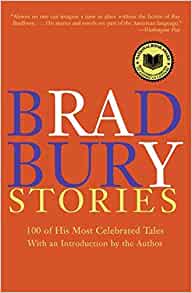
Although perhaps most widely remembered for his Prometheus-winning novel Fahrenheit 451, Bradbury was a master of the short story. “There Will Come Soft Rains,” one of his most haunting tales, imagines a distant future following a nuclear holocaust.
That future is now in the story, published in 1950 and imagining the then-far-distant year of 2026 in early August.
Bradbury’s story imagines an automated house – now a reality in millions of homes. Hauntingly, the house continues to operate even after its suburban family has been vaporized, going up in flames in Allendale, California.
“Finally, only one wall is left, protruding from the rubble. A fading voice echoes from inside the wall: “Today is August 5, 2026, today is August 5, 2026, today is . . .”
 That’s how the story ends.
Interestingly, in both this story and his most famous novel, Bradbury uses fire as the powerful, chaotic force and vivid symbol of destruction of civilization itself.
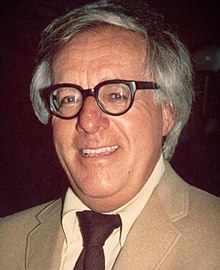
Bradbury (1920-2012) didn’t live to see this day. Happily, no one else in America has experienced the particular future that he wrote about so wistfully in his story. At least, so far.
“Though America might not have suffered the full extent of Bradbury’s post-apocalyptic predictions, the predictions are nowhere near as outlandish as they might seem at first glance,” Kaitlyn Kipert writes in NR online.
“So today, August 4, 2026, we should consider Bradbury’s short story a cautionary tale.”
Kiepert also cautions us about current trends – in technology and war.
“Don’t let the ominous gloom of the piece fade too quickly. Don’t shrug it off thinking, “I’m so glad Bradbury got it wrong!”
Because maybe he didn’t.
“2025 research by SQ Magazine estimates that 101 million American homes have smart speakers. It also predicts that the market for voice assistants will reach $11.71 billion in 2026.
“Investment banking company Morgan Stanley predicts that the humanoid robot market could exceed $5 trillion by 2050 with over 1 billion robots created. Though the initial use would largely be commercial, it is only a matter of time before these humanoid robots could take homes and communities by storm.
“AI is ascendant, and despite its incredible potential for good, it also has the power to lower human intellect through hyper-dependence on machine learning.
 “Bradbury’s short story is a stark reminder that technology is an insufficient savior. It is empty, mechanical, heartless. It can be trained, but it can never be what a human inherently is.
In the end, it couldn’t save its owners, and it couldn’t save itself.”
FOR FURTHER READING
* Read Kiepert’s full story “We’ve Survived Ray Bradbury’s Nuclear Holocaust” on NR Online.
* Read the Prometheus Blog appreciation of Bradbury’s Fahrenheit 451, inducted in 1984 into the Prometheus Hall of Fame for Best Classic Fiction.
* Read LFS co-founder Michael Grossberg’s mid-1980s interview with Ray Bradbury, republished here and here in two parts on the Prometheus Blog.

ABOUT THE PROMETHEUS AWARDS
* Join us! To help sustain the Prometheus Awards, honor outstanding freedom-loving fantastical fiction and find fellowship with other fans, join the Libertarian Futurist Society, a non-profit all-volunteer international association of freedom-loving sf/fantasy fans.
Libertarian futurists understand that culture matters. We believe that literature and the arts can be vital in envisioning a freer and better future. In some ways, culture can be even more influential and powerful than politics in the long run, by imagining better visions of the future incorporating peace, prosperity, progress, tolerance, justice, positive social change, and mutual respect for each other’s rights, dignity, individuality and peaceful choices.
* Prometheus winners: For a full list of Prometheus winners, finalists and nominees – including in the annual Best Novel and Best Classic Fiction (Hall of Fame) categories and occasional Special Awards – visit the enhanced Prometheus Awards page on the LFS website. This page includes links to all published essay-reviews in our Appreciation series explaining why each work that has won a Prometheus since 1979 fits the awards’ distinctive dual focus on both liberty and literary quality.
* Watch videos of past Prometheus Awards ceremonies, Libertarian Futurist Society panel discussions with noted sf authors and leading libertarian writers, and other LFS programs on the Prometheus Blog’s Video page.
* Read “The Libertarian History of Science Fiction,” an essay in the international magazine Quillette that highlights the Prometheus Awards, the Libertarian Futurist Society and the significant element of libertarian sf/fantasy in the evolution of the modern genre.
* Check out the Libertarian Futurist Society’s Facebook page for comments, updates and links to Prometheus Blog posts.
