Bradbury, Heinlein, Le Guin, Vonnegut stories ranked among the 26 best SF stories by New Scientist


By Michael Grossberg

E.M. Forster isn’t the only Prometheus-recognized author on New Scientist’s intriguing list of the 26 best science fiction/fantasy stories of all time.

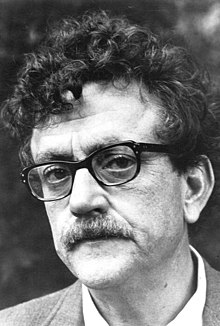
Kurt Vonnegut in 1972 (Creative Commons license)

Although Forster’s “The Machine Stop” is the only story on the list specifically inducted into the Prometheus Hall of Fame, as described in a recent Prometheus blog post, several other enduring authors have stories on the magazine’s list – just not the ones our award has recognized.

Ursula K. Le Guin (Creative Commons license)

Among those writers: Ray Bradbury, Robert Heinlein, Ursula K. Le Guin and Kurt Vonnegut.

It’s interesting to see which of their stories are recognized by the magazine, and why.

Continue reading Bradbury, Heinlein, Le Guin, Vonnegut stories ranked among the 26 best SF stories by New Scientist


Which Prometheus Hall of Fame winner is ranked among the best SF stories of all time?

By Michael Grossberg

If you were picking the 26 best science fiction short stories of all time, what would be on your list?

That requires some serious thought, but in the meantime, it can be helpful to check out what’s on other’s best lists.

Case in point: New Scientist magazine, whose writers recently compiled such a list – one that interestingly includes a story inducted into the Prometheus Hall of Fame for Best Classic Fiction.

Continue reading Which Prometheus Hall of Fame winner is ranked among the best SF stories of all time?

Ayn Rand’s Prometheus Hall of Fame winner Anthem has been adapted into a graphic novel – twice!


By Michael Grossberg

Anthem: The Graphic Novel (2018)

Did you know that Ayn Rand’s Anthem has been adapted into a graphic novel?

If so, did you realize that Rand’s Prometheus-winning ode to individualism, freedom and the rediscovery of the self has actually been adapted twice – with two different graphic novels? (I didn’t.)

The first one was published in 2011; and the second, in 2018. Together, the two versions reflect the continuing appeal and relevance of one of Rand’s earliest works.

Both are interesting to read – and to compare.

Continue reading Ayn Rand’s Prometheus Hall of Fame winner Anthem has been adapted into a graphic novel – twice!


First Anthem, then Red Pawn and Top Secret: Atlas Society publishing graphic novels of Rand’s shorter fiction

By Michael Grossberg

Fans of Ayn Rand, a two-time Prometheus Award-winner, can now appreciate some of her earliest-published fiction through the visually striking and fresh perspective of graphic novels.

The Atlas Society, a nonprofit organization promoting Ayn Rand’s fiction and philosophy, has launched an ambitious long-range project: to commission and create graphic novels of Rand’s stories, screenplays and other fictional works as they fall out of copyright and become available for fresh interpretations.

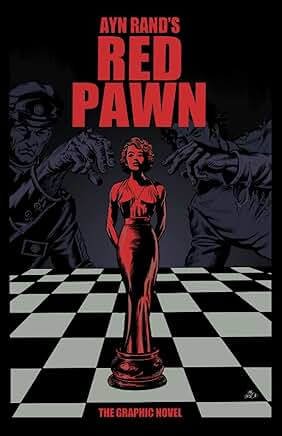
First up was the Society’s graphic novel of Rand’s poetic dystopian novella Anthem, followed by adaptations of Rand’s early screenplays into Red Pawn and Top Secret.

TOP SECRET: THE GRAPHIC NOVEL

Published most recently, Top Secret: The Graphic Novel is based on Rand’s screenplay for a movie about the making of the atomic bomb. The graphic novel adapts Rand’s 16-page outline from Jan. 19, 1946. Continue reading First Anthem, then Red Pawn and Top Secret: Atlas Society publishing graphic novels of Rand’s shorter fiction

Orwell’s Prometheus-winning Animal Farm being adapted into an animated film


By Michael Grossberg

One of the best known and most enduring Prometheus Hall of Fame winners for Best Classic Fiction has finally been adapted into an animated film.

Actor-director Andy Serkis has worked for years to bring to the screen a new animated film version of George Orwell’s fable Animal Farm, a Prometheus Hall of Fame inductee for Best Classic Film. Serkis’ film, which has been screened overseas at a film festival, is not yet available to watch in the United States.

Orwell’s cautionary and satirical fable focuses on a group of anthropomorphic farm animals who rebel against their human farmer, hoping to achieve a fully egalitarian society where all the animals are equal. Ultimately, the rebellion is betrayed, with a pig named Napoleon becoming dictator of the farm, which ends up in a far worse state than before.

Continue reading Orwell’s Prometheus-winning Animal Farm being adapted into an animated film


Why we post articles about references in popular culture to Prometheus-winning classics, from Orwell’s 1984 to Anderson’s “The Emperor’s New Clothes”


By Michael Grossberg

Not all literary works that win major awards continue to be widely read and influential, years or decades later. Yet, from Orwell’s Nineteen Eighty-Four to Hans Christian Andersen’s “The Emperor’s New Clothes,” those that do are worth noting, for they often reflect important aspects of our era’s intellectual currents and popular culture.

In that context, the number of Prometheus-winning works that commonly are referenced by prominent columnists, essayists and authors continues to be impressive.

Of the more than 100 novels, stories, films and other works of fantastical fiction that have won a Prometheus award for Best Novel or Best Classic Fiction (our Hall of Fame) since the first prize was presented in 1979, more than a dozen are written about frequently in magazines, newspapers, Substack columns, books or referenced in movies, plays and other realms of popular culture.

Among the many Prometheus-winning authors most commonly written about – sometimes with a purely literary focus but more often used as resonant reference points for 21st century commentary – are George Orwell, Ray Bradbury, Kurt Vonnegut, Ayn Rand, J.RR. Tolkien, Neal Stephenson and Hans Christian Andersen.

Continue reading Why we post articles about references in popular culture to Prometheus-winning classics, from Orwell’s 1984 to Anderson’s “The Emperor’s New Clothes”


What leading libertarian theorist and novelist David Friedman thinks of Lois McMaster Bujold, L. Neil Smith, J. Neil Schulman, Robert Heinlein and other Prometheus-winning authors


By Michael Grossberg

David Friedman (Creative Commons license)

David Friedman, a guest presenter at the 45th Prometheus Awards show, is a regular reader of science fiction and fantasy – and the prominent economist and leading libertarian theorist has been influenced in his thinking by several Prometheus-winning authors.

So it’s interesting to hear Friedman’s views on a variety of sf/fantasy writers, which he shared in response to questions at the end of the Aug. 30, 2025, awards ceremony.

In addition to Poul Anderson (the 2025 Hall of Fame winner for Orion Shall Rise), Robert Heinlein, Jerry Pournelle and Vernor Vinge (Prometheus-winning writers that Friedman discussed during his main speech), Friedman offered comments and insights on the novels of Prometheus winners Lois McMaster Bujold, L. Neil Smith, J. Neil Schulman, C.J. Cherryh (highlighted in a previous blog), Heinlein and other sf/fantasy writers.

Continue reading What leading libertarian theorist and novelist David Friedman thinks of Lois McMaster Bujold, L. Neil Smith, J. Neil Schulman, Robert Heinlein and other Prometheus-winning authors


Why leading economist, libertarian theorist and novelist David Friedman admires Prometheus winner C.J. Cherryh


By Michael Grossberg

Even after all of the inspiring, thought-provoking and occasionally poignant or amusing speeches by presenters and acceptors, the  45th Prometheus Awards ceremony was worth watching through the very end of its 48 minutes.

David Friedman (Photo provided by Friedman)

During the post-ceremony Q&A discussions of the live Zoom event (recorded and later posted on YouTube), guest Hall of Fame presenter David Friedman offered interesting and revealing comments on a wide variety of science-fiction novelists – including Poul Anderson, the 2025 Hall of Fame winner for his novel Orion Shall Rise; Robert Heinlein, Jerry Pournelle and Vernor Vinge.

C.J. Cherryh in the 1990s (File photo)

A leading economist and libertarian theorist and author of half a dozen non-fiction books, Friedman’s views are worth quoting – especially because he understands the challenges of writing fantastical fiction from his own experience as a Prometheus-nominated writer of three fantasy novels: Harald, Salamander and Brothers.

Here is what Friedman had to say about C.J. Cherryh, among half a dozen sf authors that he commented on in the post-ceremony question period.

Continue reading Why leading economist, libertarian theorist and novelist David Friedman admires Prometheus winner C.J. Cherryh


“Every Day is a Good Day” – Tom Jackson’s new book offers a 50th anniversary tribute to Robert Shea, co-author with Robert Anton Wilson of the Prometheus-winning Illuminatus! trilogy

By Michael Grossberg

Marking the 50th anniversary of the publication of the Prometheus-winning Illuminatus! trilogy by Robert Shea and Robert Anton Wilson, Hilaritus Press has published a book honoring Shea by journalist Tom Jackson, a veteran LFS member and Prometheus Awards judge.

Jackson, who edits the Robert Anton Wilson Illumination blog celebrating the fiction and non-fiction  of Shea and Wilson, edited Every Day is a Good Day, an anthology of Shea’s writings.

S
ubtitled “Robert Shea on Illuminatus!, Writing and Anarchism,” the anthology book has “quite a bit about the Libertarian Futurist Society in it,” Jackson said.

Continue reading “Every Day is a Good Day” – Tom Jackson’s new book offers a 50th anniversary tribute to Robert Shea, co-author with Robert Anton Wilson of the Prometheus-winning Illuminatus! trilogy

The Diamond Age: Neal Stephenson’s first Prometheus finalist for Best Novel hailed as prophetic and timely cautionary tale


By Michael Grossberg

“The only person who might have envisioned a future as outlandish as our present is the Seattle-based author Neal Stephenson.”

Neal Stephenson in 2019 (Creative Commons license)

That’s the interesting and notable view of British-American historian Niall Ferguson, expressed in his Time Machine column on Substack.

To back up his thesis, Ferguson offers a detailed argument revolving around Stephenson’s 1995 science fiction novel The Diamond Age.

Along with his earlier breakthrough cyberpunk (or post-cyberpunk) novel Snow Crash (1992), The Diamond Age put Stephenson on the map as a visionary writer to watch – and read.

Continue reading The Diamond Age: Neal Stephenson’s first Prometheus finalist for Best Novel hailed as prophetic and timely cautionary tale