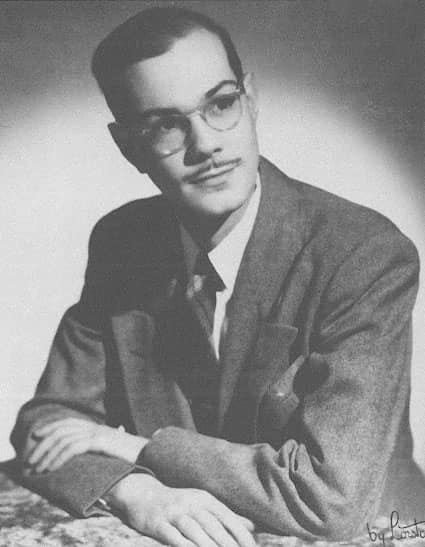
Bestselling British author C.S. Lewis wrote more than 30 books of fiction and non-fiction. With estimated sales approaching 200 million copies in print, Lewis (1898-1963) is best-known for his children’s fantasy series The Chronicles of Narnia and his devilish epistolary novel The Screwtape Letters.
Lewis also wrote science fiction – most notably, his Space Trilogy, which culminates with That Hideous Strength, Lewis’ most libertarian novel.
Selected by LFS judges as one of this year’s Prometheus Hall of Fame finalists for Best Classic Fiction, That Hideous Strength offers a dystopian and metaphysical vision that dramatizes warring ideologies of good and evil, freedom and tyranny.
Freshly exploring utopian and dystopian themes, Salt contrasts an anarchist community and its statist neighbor on a harsh desert planet.
Suspenseful and thought-provoking, Adam Roberts’ science fiction novel illuminates how customs, attitudes and ideologies on both sides spark mutual misunderstandings and accelerating conflicts.
A finalist for the next Prometheus Hall of Fame award for Best Classic Fiction, Robert’s cautionary tale invites us to question our deepest assumptions about freedom.
Fresh titles dominate this year’s slate of just-announced finalists for the next Prometheus Hall of Fame Award for Best Classic Fiction.
This year’s five finalists – first published between 1932 and 2003 – include novels by James Blish (The Star Dwellers), C.S. Lewis (That Hideous Strength), Aldous Huxley (Brave New World), Adam Roberts (Salt) and Charles Stross (Singularity Sky).
James Blish in the 1960s (Creative Commons license)
Blish and Roberts are first-time Hall of Fame nominees, while this is the first time that Huxley’s classic dystopian novel has been recognized as a finalist.
Blish, a Hugo-winning author widely admired in the 1950s and 1960s during the peak of the so-called Golden Age ofmodern sf, has never before been nominated for the Prometheus Award – perhaps in retrospect a major omission that at last has been corrected.
Although Huxley’s classic dystopian novel was nominated during the first decade of our awards in the 1980s, this is the first nomination for Brave New World in roughly four decades.
If you were picking the 26 best science fiction short stories of all time, what would be on your list?
That requires some serious thought, but in the meantime, it can be helpful to check out what’s on other’s best lists.
Case in point: New Scientist magazine, whose writers recently compiled such a list – one that interestingly includes a story inducted into the Prometheus Hall of Fame for Best Classic Fiction.
Did you know that Ayn Rand’s Anthem has been adapted into a graphic novel?
If so, did you realize that Rand’s Prometheus-winning ode to individualism, freedom and the rediscovery of the self has actually been adapted twice – with two different graphic novels? (I didn’t.)
The first one was published in 2011; and the second, in 2018. Together, the two versions reflect the continuing appeal and relevance of one of Rand’s earliest works.
Marking the 50th anniversary of the publication of the Prometheus-winning Illuminatus! trilogy by Robert Shea and Robert Anton Wilson, Hilaritus Press has published a book honoring Shea by journalist Tom Jackson, a veteran LFS member and Prometheus Awards judge.
Jackson, who edits the Robert Anton Wilson Illumination blog celebrating the fiction and non-fictionof Shea and Wilson, edited Every Day is a Good Day, an anthology of Shea’s writings.
Subtitled “Robert Shea on Illuminatus!, Writing and Anarchism,” the anthology book has “quite a bit about the Libertarian Futurist Society in it,” Jackson said.
James Blish in the 1950s (Creative Commons license)
Works by James Blish, Philip K. Dick, Aldous Huxley, C.S. Lewis, Frederik Pohl, Adam Roberts, J. Michael Straczynski, Charles Stross and Harry Turtledove have been nominated for the next Prometheus Hall of Fame Award for Best Classic Fiction.
Aldous Huxley (Creative Commons license)
A majority of this year’s Hall of Fame nominees are appearing on the short list for the first time – a promising sign that this category for time-honored classic fiction remains full of notable and lasting works worth recognizing.
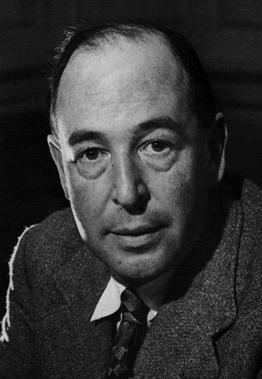
C.S. Lewis (Creative Commons license)
The oldest nominee on the list is Aldous Huxley’s 1932 novel Brave New World, with the second-oldest C.S. Lewis’ 1945 novel That Hideous Strength.
While Lewis’ cautionary sf novel has been nominated before and previously has ranked as a Best Classic Fiction finalist, Huxley’s dystopian classic has never before been nominated for the Prometheus Award – and is arguably overdue.
One of the things Poul Anderson was known for throughout his literary career was world-building. Much of this was planetary design, based on the natural sciences, in which he started out with stellar type, planetary mass, orbital radius, and elemental abundances and worked out the geology, meteorology, and biology of a world.
Poul Anderson (Creative Commons license)
Anderson was certainly one of the masters of this, up there with Hal Clement and Vernor Vinge. But he put equal effort into social scientific worldbuilding, creating economies, polities, and cultures, and developing plots for his stories from the conflicts they gave rise to. Orion Shall Rise, winner of the 2025 Prometheus Hall of Fame for Best Classic Fiction, is a nearly pure example of social scientific world-building, set not in a distant solar system but on a future Earth.
Libertarian Futurist Society president William H. Stoddard emceed the 45th Prometheus Awards and introduced the Prometheus Hall of Fame category for Best Classic Fiction, which was presented by libertarian luminary and Prometheus-nominated fantasy novelist David Friedman.
LFS President William H. Stoddard (Photo by Carol Stoddard)
The August 30, 2025 awards ceremony, presented live via Zoom on August 30, 2025, was recorded and later posted on Youtube. Here is the text of Stoddard’s speech:
The Prometheus Hall of Fame award was established in 1983.
Initially we gave it to two classic works of libertarian science fiction each year. Our first two winners were virtually inevitable choices: Robert A. Heinlein’s The Moon Is a Harsh Mistress, the book that established libertarian science fiction as a recognized genre, and Ayn Rand’s Atlas Shrugged, the fictional treatment of libertarian ideas that brought large numbers of people into what became the libertarian movement.
The next year’s award went to two classic dystopias, George Orwell’s 1984and Ray Bradbury’s Fahrenheit 451.
Since then we’ve settled down to one winner a year, and opened the award not merely to novels but to work in any narrative or dramatic form. Such works become eligible 20 years after their original publication.
To present this year’s award, we have the honor of having David Friedman as a guest speaker.
David D. Friedman added excitement and intellectual stimulation as the guest presenter at the 45th Prometheus Awards ceremony.
David Friedman (Photo provided by Friedman)
A leading libertarian theorist (The Machinery of Freedom), economist (Price Theory: An Intermediate Text) and law-and-economics professor (Law’s Order: What Economics Has to Do with Law and Why It Matters), David is also a Prometheus-nominated sf/fantasy novelist (Harald, Salamander, Brothers).
Friedman presented the Prometheus Hall of Fame category for Best Classic Fiction during the Aug. 30 ceremony. Here is the text of his speech, which followed an introduction by LFS President William (Bill) Stoddard.
By David D. Friedman
Bill mentioned my friend Vernor Vinge, who is in part responsible for my writing my second novel.
I described to him my idea for that and for the alternative, a sequel to my first novel (Harald, a 2007 Prometheus Best Novel nominee). He thought Salamander would more interesting, so I wrote it. He was right.
I thought I’d start by saying a little about what I’ve learned relevant to libertarianism from science fiction.
As some of you may know, Vernor’s story “The Ungoverned” (inducted in 1994 into the Prometheus Hall of Fame) is about a stateless society, modeled on my ideas, being invaded by an adjacent state.
Seeing that society through the eyes of a novelist rather than an economist showed me things about it that would not have occurred to me….

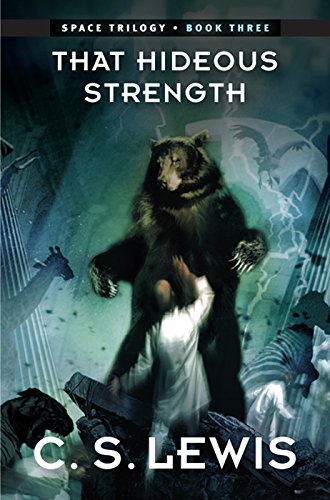 Lewis also wrote science fiction – most notably, his Space Trilogy, which culminates with That Hideous Strength, Lewis’ most libertarian novel.