Jo Walton on Poul Anderson: One Prometheus winner recommends another


By Michael Grossberg

It’s great to see one widely respected sf/fantasy author in praise of another. Especially when such praise reminds us of the talents and achievements of a truly grand master of sf/fantasy who has passed but is far from forgotten.

Jo Walton tips her hat to the late great Poul Anderson in her monthly book-review column for Reactor magazine.

Walton, who won her own Prometheus Award for Ha’penny, singled out the multiple-Prometheus-winning Anderson on her recommended-reading shortlist for All One Universe, his 1996 short-story anthology.

“This collection of stories and essays is just delightful—great thought-provoking stories, and mostly interesting essays, and I loved it,” Walton writes.

Continue reading Jo Walton on Poul Anderson: One Prometheus winner recommends another


“And the nominees are…” NOT the same thing as finalists! (How the Oscars differ from the Hugo and Prometheus awards, and why it matters)

By Michael Grossberg

“And the nominees are…”

Those words are familiar to just about everyone in America, since people frequently repeat them at several of the biggest annual televised awards ceremonies.

Especially at the Academy Awards, informally known as the Oscars – and still the premier annual American awards show in arts and entertainment despite its recent decline.

Yet I’d argue that such an iconic phrase is often misleading. Worse, it can lead to confusion and misperceptions about other awards – including our own.

The Prometheus Awards use the term “nominees” quite differently than the Oscars do.

What the Academy of Motion Picture Arts and Sciences, which sponsors and presents the Academy Awards, dubs “nominees” is actually what the Prometheus awards quite properly refers to as finalists.

That may seem like mere semantics, or a minor disagreement over labeling, but it’s an important distinction with significant differences.

In fact, finalists attain a higher level of recognition than nominees – and thus deserve greater respect and their own distinct name.

Continue reading “And the nominees are…” NOT the same thing as finalists! (How the Oscars differ from the Hugo and Prometheus awards, and why it matters)

It’s no ‘Mystery’ why libertarian author Steve Burgauer often writes science fiction 


By Michael Grossberg

Libertarian Steve Burgauer has written a dozen novels.

Libertarian SF novelist Steven Burgauer (Photo courtesy of author)

Although Burgauer writes historical and adventure novels, too – including his recently released The Mystery of the Broken Gargoyle – much of his work falls within the genre of science fiction.

Among his SF novels: The Railguns of Luna, Skullcap, The Grandfather Paradox, A More Perfect Union, Moonbeam and The Fornax Drive.

How was Burguauer first attracted to science fiction?

What makes him keep writing it?

And how does he relate such speculative fiction to the future, to progress and to liberty?

Continue reading It’s no ‘Mystery’ why libertarian author Steve Burgauer often writes science fiction 


Ilya Somin: The Cato Institute scholar, law professor and SF/fantasy fan will present the Hall of fame award at our 2026 ceremony


By Michael Grossberg

Ilya Somin will be the guest presenter and keynote speaker at the Libertarian Futurist Society’s 2026 Prometheus Awards ceremony.

Ilya Somin (File photo)

A professor of Law at George Mason University and the B. Kenneth Simon Chair in Constitutional Studies at the Cato Institute, a leading libertarian think tank, Somin has written several books reflecting his research and expertise on constitutional law, property law, democratic theory, federalism, and migration rights.

Just as relevant to our upcoming August 2026 awards ceremony – which will be hosted on Zoom and open to the public – Somin is a long-time fan of science fiction and fantasy – which he plans to focus on in his speech presenting the Prometheus Hall of Fame for Best Classic Fiction.

Continue reading Ilya Somin: The Cato Institute scholar, law professor and SF/fantasy fan will present the Hall of fame award at our 2026 ceremony


RIP Brian Doherty


Creative Commons photo by Gage Skidmore of Brian Doherty,

By Tom Jackson

Libertarian author and journalist Brian Doherty, 57, has died. Reason Magazine has published an obituary. 

It seems likely that some of you have read his big history of modern libertarianism, Radicals for Capitalism, or one of his other books, but there’s a more direct connection to the Libertarian Futurist Society: He was an expert on the Illuminatus! trilogy by Robert Anton Wilson and Robert Shea, which won a Prometheus Hall of Fame Award. Here is a piece he wrote about it, originally intended for the New York Times Book Review.

Discovering libertarianism through fiction, part 2: How James Blish, Ayn Rand and other writers sparked my intellectual evolution


By Michael Grossberg

For me as a boy, The Star Dwellers was revelatory.

An idealistic drama about a fraught “second contact” between Earth humans and ancient aliens, James Blish’s 1961 novel sparked my thinking about ethics, economics and politics.

I couldn’t have imagined at the time what reading yet another Young Adult science fiction novel would lead me to, but ultimately The Star Dwellers paved the way for me to develop into a full-fledged libertarian by the early 1970s.

Continue reading Discovering libertarianism through fiction, part 2: How James Blish, Ayn Rand and other writers sparked my intellectual evolution


Discovering libertarian ideas through fiction: It usually begins with Rand and Heinlein – but in my unusual case, it was James Blish’s The Star Dwellers


“People come to libertarianism through fiction. They come through Ayn Rand… Robert Heinlein…. L. Neil Smith.”
– Libertarian feminist author Wendy McElroy at the 2000 Prometheus Awards ceremony

By Michael Grossberg

For quite a few libertarians, “It Usually Begins with Ayn Rand.” Or Robert Heinlein. Or other freedom-loving science fiction writers.

James Blish in the 1960s (Creative Commons license)

For me, though, my introduction to libertarian and classical-liberal ideas and ideals began earlier – at least in part – with James Blish.

Specifically, Blish’s The Star Dwellers.

When I read Blish’s 1961 novel as a pre-teen in the early 1960s, I came to understand for the first time key insights about voluntary consent and mutual exchange for profit as the best foundation for peace and progress.

Now a finalist for the next Prometheus Hall of Fame award for Best Classic Fiction, The Star Dwellers is a young-adult-oriented science fiction novel that revolves around a fraught “second contact” between star-faring humans and an ancient, advanced alien species.

Continue reading Discovering libertarian ideas through fiction: It usually begins with Rand and Heinlein – but in my unusual case, it was James Blish’s The Star Dwellers


Godspeed, Artemis astronauts! The first human return to lunar space after more than half a century is overdue – and welcome


By Michael Grossberg

The first human beings to journey into deep space since 1972 might be on their way as early as today.

The first flight of America’s ambitious Artemis mission aims to lift off in early March for the first crewed mission around the Moon since the Apollo era. Initially scheduled for February,  Artemis 2 might take off on its next window in early April if the mission can’t make any of five potential launch dates March 6-9 or March 11.

The Artemis 2 Orion rocket on the Cape Canaveral launching pad (NASA file photo)

“NASA does not expect to be able to land astronauts on the moon before 2027, at the earliest. Realistically, it’s unlikely that such an undertaking would occur before 2028. But the Artemis II mission is no perfunctory exercise. This will be a difficult and dangerous mission, and it’s a precursor to America’s eventual return to our nightly neighbor — this time, to stay,” columnist Noah Rothman wrote in an insightful National Review article about the prospects of the upcoming mission.

Continue reading Godspeed, Artemis astronauts! The first human return to lunar space after more than half a century is overdue – and welcome


Where to get the five 2026 Hall of Fame finalists – for as low as $5.87 total if you act fast


By Michael Grossberg

If you don’t already have the books to read of the five novels selected as 2026 finalists for the next Prometheus Hall of Fame award, here’s some helpful tips on where you can find each of them.

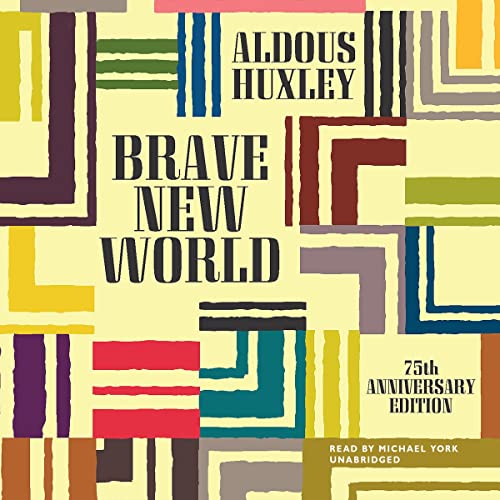
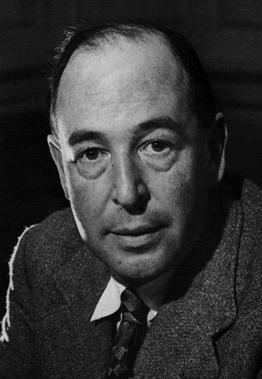
First published between 1932 and 2003, the five Best Classic Fiction finalists are James Blish’s The Star Dwellers, C.S. Lewis’ That Hideous Strength, Aldous Huxley’s Brave New World, Adam Roberts’ Salt and Charles Stross’ Singularity Sky.

Surprisingly, it turns out the total cost of buying copies of all five novels right now – as ebooks or in print – is remarkably low.  In fact, a recent price check on Amazon confirms that all five finalists can be purchased for just $5.87 total, assuming you’re willing to get most as ebooks.

Of course, if you prefer to check your local library for these titles, you should be able to borrow the books for free. Yet it’s possible one of the older and lesser-known titles may not be widely available, and anyway, some LFS members often prefer to buy their own copies to add to their home library.

In most cases, each novel is available in multiple formats – including hardback, paperback and ebook, sometimes also as an audio book.

Continue reading Where to get the five 2026 Hall of Fame finalists – for as low as $5.87 total if you act fast


The biggest novels in Prometheus history: An annotated list of the top dozen in page length (and why such epic works reward readers)


By Michael Grossberg

Size matters – or at least it can make a big difference, in helping a novel to achieve greater dramatic impact in its scope, depth, narrative complexity and emotional power.

Quite a few longer novels have been recognized by the Prometheus Awards over the past 47 years, whether as nominees, finalists or winners – from J.R.R. Tolkien’s The Lord of the Rings, Neal Stephenson’s Cryptonomicon and Ayn Rand’s Atlas Shrugged to the recent nomination of Sarah Hoyt’s three-volume No Mans Land for the next Prometheus Award for Best Novel.

The three classic and epic works by Tolkien, Stephenson and Rand rank No. 1, 2 and 3 in page length in the history of the Prometheus Awards – as detailed in previous Prometheus Blog articles about the three bestselling winners and No Man’s Land.

So what are all the Prometheus-recognized novels and their ranks in page lengths on our top-12 list?

Continue reading The biggest novels in Prometheus history: An annotated list of the top dozen in page length (and why such epic works reward readers)