
 Aldous Huxley’s Brave New World is one of the oldest works to win the Prometheus Award for Best Classic Fiction.
Published in 1932 by Chatto & Windus, Aldous Huxley’s pioneering dystopian novel has become so well-known around the world that its title has become an emblematic catchphrase signaling the dangers of authoritarianism.
Brave New World is the third-oldest work and the second-oldest novel to be inducted into the Prometheus Hall of Fame. (The roughly hourlong Zoom ceremony, open to the public, is scheduled to begin at 1 p.m. Sunday Aug. 16 (Eastern time), with the Zoom link posted a week or so ahead on the Prometheus Blog.)
THREE EARLY DYSTOPIAN NOVELS
 The only other Hall of Fame inductees to have been published in the 1930s are Sinclair Lewis’s cautionary novel It Can’t Happen Here, published in 1935, and Ayn Rand’s poetic short novel Anthem, first published in England in 1938 (and not published in the United States until 1946.)
 The only novel published earlier in the 20th century to win the Hall of Fame award is Yevgeny Zamyatin’s dystopian Russian novel We, written in 1921, published in 1924 and inducted into our Prometheus Hall of Fame in 1994.
The new genre of dystopian literature arose in the 20th century partly in reaction to the rise of authoritarian collectivism in the Soviet Union under Lenin and in National Socialist Germany under HItler.
 Zamyatin’s We paved the way, with Huxley’s Brave New World and Rand’s Anthem also setting the stage among the pioneering works of the new genre for a fundamental reappraisal of various utopian dreams, which all too often end up in reality as dystopian nightmares.
FORSTER’S “THE MACHINE STOPS”
Only one other Hall of Fame winner was published earlier in the 20h century: E.M. Forster’s prescient science fiction story “The Machine Stops,” published in 1909.
Predicting much modern technology and automation with the Machine taking care of every human need, Forster’s tale imagines a society of enforced physical isolation and offers cautionary themes about the dangers of government and the possibilities for absolute control growing out of people’s demands.
 ANDERSEN’S “THE EMPEROR’S NEW CLOTHES”
The only work created before the 20th century that has won the Prometheus Hall of Fame is Hans Christian Andersen’s short fable “The Emperor’s New Clothes,” first published in 1837 in Anderson’s third anthology.
The LFS inducted Anderson’s sly libertarian fable, a cautionary tale about how honestly and truth are among the first casualties in power politics, was inducted by LFS members in 2000 into the Hall of Fame.
FOUR 1940s CLASSICS
Only four works that first appeared in the 1940s have won the Hall of Fame award: Robert Heinlein’s Red Planet, George Orwell’s Nineteen Eighty-Four and Animal Farm and Jack Williamson’s “With Folded Hands…”
 Orwell’s cautionary novel Nineteen Eighty-Four, published in 1948, is one of the best known works to win a Prometheus Award. Aptly inducted in 1984 into the Hall of Fame, the dystopian classic warns of a stark Stalinist future in which a boot crushes the human face forever.
Published in 1945, Animal Farm is Orwell’s enduring allegorical tale about the corruptions of power and the absolute corruption of absolute power. Adapted into three film versions, most recently a very poor animated film version this year, the novel was inducted in 2011 into the Hall of Fame.
HEINLEIN’S JUVENILES
 First published in 1949, Red Planet was one of Heinlein’s earliest “juvenile” science fiction novels, geared for a younger audience of teens and young adults. Framed as an adventure centering on two boys in boarding school with an alien “pet,” Red Planet explores libertarian themes of corrupt bureaucracy, petty tyranny and rebellion.
Published in 1947 in Astounding Science Fiction magazine and inducted in 2018 into the Hall of Fame, Williamson’s novelette “With Folded Hands…” imagines a future dominated by seemingly benevolent robots, whose well-intentioned directives have nightmarish implications for humanity, individual autonomy and liberty.
 Rooted partly in the 1940s is Heinlein’s Methuselah’s Children, inducted in 1997 into the Hall of Fame. First published in 1941 as a three-part serial in Astounding Science Fiction, Methuselah’s Children was expanded by Heinlein into a novel published in 1958.
The plot revolves around an unusually long-lived family that tries to remain unnoticed to avoid envy and persecution by changing identities as they age. When a small percentage of the Howard family elect to step forth into regular society, they face coercion, capture, imprisonment, exposure and torture by people in power who mistakenly assume there’s a secret to such long life that can be applied to extend their lives.
VAN VOGT’S ASTOUNDING 1940S STORY
 Also partly rooted in the 1940s is A.E. Van Vogt’s 1951 novel The Weapon Shops of Isher, the 2005 Hall of Fame winner. The novel was based in part on the author’s story “The Weapon Shop,” published in 1941 in Astounding Science Fiction.
Both the story and novel dramatize the power of self-defense to to sustain personal freedom. The novel introduced one of the most famous political slogans in science fiction: The Right to Buy Weapons is the Right to Be Free.
NOTABLE 1950S HALL OF FAME WINNERS
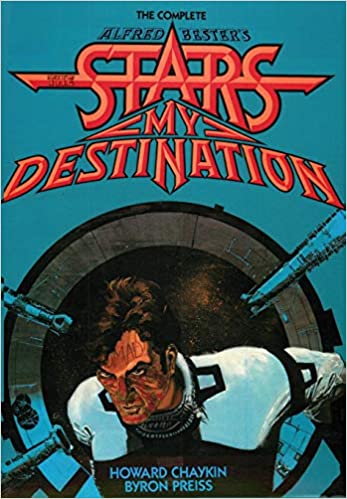 Several other notable Hall of Fame winners were first published in the 1950s, including Alfred Bester’s The Stars My Destination, Ray Bradbury’s Fahrenheit 451, Robert Heinlein’s Citizen of the Galaxy, Ayn Rand’s Atlas Shrugged, Eric Frank Russell’s The Great Explosion (about 40 percent of the 1962 novel incorporates his 1951 story “And Then There Were None”) and J.R.R. Tolkien’s The Lord of the Rings.
Many more Hall of Fame inductees were published in the 1960s, 1970s and 1980s. For a full list of the 50 works inducted so far into the Prometheus Hall of Fame, visit the Prometheus Awards page of the LFS website, which includes links to review-essay Appreciations of each winner.
As of 2026, any work that first appeared before 2006 can be considered for nomination. And this past year, two 2000s novels became Hall of Fame finalists: Salt, a 2000 novel by Adam Roberts, and Singularity Sky, a 2003 novel by Charles Stross.
The other two finalists were The Star Dwellers, a 1961 novel by James Blish, and That Hideous Strength, a 1945 novel by C.S. Lewis. Works that haven’t won the award may be nominated again in future years by LFS members.
THE VINTAGE FOCUS OF THE HALL OF FAME
According to LFS eligibility rules, works of fiction in any medium can be nominated for the Prometheus Hall of Fame so long as they were first published, staged, recorded, performed or released at least 20 years ago.
That said, the goal and focus of the Hall of Fame is on classic pro-freedom works within the fantastical genres (including but not limited to science fiction and fantasy) that have truly stood the test of time.
Certainly, Brave New World, has proven its enduring stature and continuing relevance.

WATCH THE AUG. 16 PROMETHEUS AWARDS CEREMONY
The 46th annual Prometheus Awards will be presented online Sunday afternoon Aug. 16, 2026, in a zoom awards ceremony open to the public.
This year’s roughly hourlong ceremony, to start at 1 p.m. Eastern time and emceed by LFS President William H. Stoddard, will feature several guest speakers. Lifelong science-fiction fan Ilya Somin (George Mason University law professor, Cato Institute scholar and author), will present the Hall of Fame award.
Updates will be posted on the Prometheus Blog over the next several weeks about additional speakers and the full ceremony line-up.
* Read the full press release announcing the 2026 Best Novel and Hall of Fame winners.

ABOUT THE LFS AND THE PROMETHEUS AWARDS
* Join us! To help sustain the Prometheus Awards and support a cultural and literary strategy to appreciate and honor freedom-loving fiction, join the Libertarian Futurist Society, a non-profit all-volunteer international association of freedom-loving sf/fantasy fans.
Libertarian futurists understand that culture matters. We believe that literature and the arts can be vital in envisioning a freer and better future. In some ways, culture can be even more influential and powerful than politics in the long run, by imagining better visions of the future incorporating peace, prosperity, progress, tolerance, justice, positive social change, and mutual respect for each other’s rights, human dignity, individuality and peaceful choices.
* Prometheus winners: For a full list of Prometheus winners, finalists and nominees – including in the annual Best Novel and Best Classic Fiction (Hall of Fame) categories and occasional Special Awards – visit the enhanced Prometheus Awards page on the LFS website. This page includes convenient links to all published essay-reviews in our Appreciation series explaining why each of the 106 works that have won a Prometheus since 1979 fits the awards’ distinctive dual focus on both quality and liberty.
* Watch videos of past Prometheus Awards ceremonies, Libertarian Futurist Society panel discussions with noted sf authors and leading libertarian writers, and other LFS programs on the Prometheus Blog’s Video page.
* Read “The Libertarian History of Science Fiction,” an essay in the international magazine Quillette that favorably highlights the Prometheus Awards, the Libertarian Futurist Society and the significant element of libertarian sf/fantasy in the evolution of the modern genre.
* Check out the Libertarian Futurist Society’s Facebook page for comments, updates and links to the latest Prometheus Blog posts.
