
By Michael Grossberg

Reason magazine’s Nick Gillespie interviews acclaimed science fiction writer Neal Stephenson for the latest podcast of The Reason Interview with Nick Gillespie.
It’s worth watching.
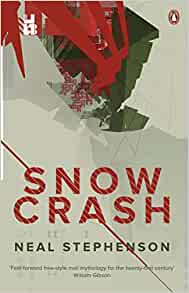
Referencing Snow Crash and The Diamond Age, the first two Stephenson novels nominated for Prometheus Awards, Gillespie introduces Stephenson as “one of the people who has helped create the scaffolding of how we live today.”
Stephenson – a three-time Prometheus winner for Cryptonomicon, The System of the World and Seveneves – discusses several things of interest to LFS members, other science fiction fans and other libertarians.
Among them: the internet’s early promise of decentralization, how Big Tech came to dominate it, and why the metaverse hasn’t lived up to the vision Stephenson introduced in Snow Crash. Perhaps of greatest interest: why Stephenson believes the West’s Enlightenment values remain worth defending.

Stephenson discusses his latest novel, D: Heavy Water, which “revisits the early days of World War II, when scientists were racing to understand nuclear fission and a secret mission sought to keep a crucial ingredient for atomic weapons out of Nazi hands.”
Gillespie talks with Stephenson about what drew him to this forgotten chapter of history and “how revolutionary idealism can give way to authoritarianism.”
One of Stephenson’s recurrent themes is how politics and coercive government often tend to undermine human progress and human civility, while private and voluntary cooperation preserve and extend civilization.
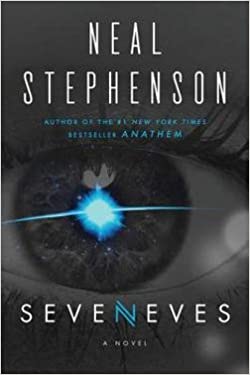 Of greatest interest to libertarians, classical liberals and other freedom lovers is the dramatic and revealing ways that Seveneves and his other Prometheus winners implicitly contrasts the “political means” (i.e. institutionalized coercion, and its attendant deceptions and manipulations from unbridled egotists indulging power lust for short-term but illusory advantages) with the “economic means” (i.e. the voluntary private initiative and cooperation that tends to be encouraged and is more common through the mutual aid and trade of a free society and its free marketplace.)

Reason’s post helpfully lists the timing of the podcast, for those interested in a particular topic:
0:00—The failure of the metaverse
9:59—Did the internet fail on its original promise?
14:36—The impact of technology conglomerates
17:22—What we get wrong about the Puritans
21:45—Mother Earth Mother Board
25:14—Blue Origin and space exploration
31:22—D: Heavy Water synopsis
35:49—Creating characters with nuance
40:00—Francoists
41:29—Atomic bomb development

44:13—Communism
46:22—Cryptonomicon
50:06—The Big U
52:46—Stephenson’s literary influences
55:23—Democracy and politics

1:00:28—The aftermath of 9/11
1:05:34—Faith and science
Reason also links to a variety of previous articles and reviews about Stevenson and his novels.
You can listen to the podcast at reason.com or watch it on YouTube.

ABOUT THE LFS AND THE PROMETHEUS AWARDS
* Join us! To help sustain the Prometheus Awards, honor outstanding freedom-loving fantastical fiction and find fellowship with other fans, join the Libertarian Futurist Society, a non-profit all-volunteer international association of freedom-loving sf/fantasy fans.
Libertarian futurists understand that culture matters. We believe that literature and the arts can be vital in envisioning a freer and better future. In some ways, culture can be even more influential and powerful than politics in the long run, by imagining better visions of the future incorporating peace, prosperity, progress, tolerance, justice, positive social change, and mutual respect for each other’s rights, dignity, individuality and peaceful choices.
* Prometheus winners: For a full list of Prometheus winners, finalists and nominees – including in the annual Best Novel and Best Classic Fiction (Hall of Fame) categories and occasional Special Awards – visit the enhanced Prometheus Awards page on the LFS website. This page includes links to all published essay-reviews in our Appreciation series explaining why each winning work since 1979 fits the awards’ distinctive dual focus on both liberty and literary quality.
* Watch videos of the annual Prometheus Awards ceremonies, Libertarian Futurist Society panel discussions with noted sf authors and leading libertarian writers, and other LFS programs on the Prometheus Blog’s Video page.
* Read “The Libertarian History of Science Fiction,” an essay in the international magazine Quillette that highlights the Prometheus Awards, the Libertarian Futurist Society and the significant elements of libertarian themes and insights in the evolution of the modern SF/fantasy genre.
* Check out the Libertarian Futurist Society’s Facebook page for updates, comments, and links to Prometheus Blog posts.
