
By Michael Grossberg
How do you preserve and advance liberty?
How can libertarians (called “liberals” in most of the rest of the world) lay the groundwork for a fully free, peaceful and just society based on universal individual rights, self-ownership and non-aggression?
Given the various political and cultural trends and countertrends today – both supporting liberty in some areas and undermining it in others – how can different societies preserve their level of freedom and fight various types of authoritarianism?
How does the spread of popular culture shape and constrain politics in modern democracies or republics that have at least some degree of freedom already embedded in their societies yet under stress from statism and centralizing government power?
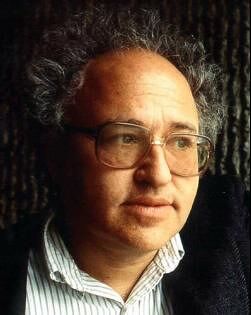
David Friedman, a leading libertarian thinker, law-and-economics expert and Prometheus-nominated science fiction writer, has dedicated much of his life and career to exploring such vital and sadly perennial questions.
And on his must-read Substack page, Friedman offers a variety of practical suggestions. One of the best strategies for spreading ideas widely, Friedman said, is to focus on culture rather than politics – specifically, arts and entertainment, from novels to movies and television shows.
“Make libertarian ideas available in attractive forms, movies or TV shows that people will enjoy watching, books, essays, blogs they will enjoy reading,” he writes in a recent column.
WHY CULTURE MATTERS – AND SHAPES POLITICS
That same strategy – to recognize superior examples of novels, stories, movies and other forms of fiction that dramatizes the benefits of freedom or exposes the dangers and risks of tyranny under any form of unlimited government or centralized coercive power – is what animates the Libertarian Futurist Society and the Prometheus Awards.
As we often say on the blog and in our press releases, “Libertarian futurists understand that culture matters. We believe that literature and the arts can be vital in envisioning a freer and better future. In some ways, culture can be even more influential and powerful than politics in the long run, by imagining better visions of the future incorporating peace, prosperity, progress, tolerance, justice, positive social change, and mutual respect for each other’s rights, human dignity, individuality and peaceful choices.”

FRIEDMAN’S TRIP TO SOUTH AMERICA
Friedman’s Substack column “How to Save the Third World”” was sparked by a recent trip to Chile and Argentina.
“Chile is the most free market country in Latin America and the richest but lately has been becoming a little less of both, so one topic of conversation was how to reverse that, more generally how to make Chile more libertarian (most Chileans would say more liberal¹),” Friedman writes.
“I then spent another week in Argentina, which is becoming more libertarian, again associating mostly with libertarians, so the same topic came up there in the context of how to keep it doing so.”
 “Chile is one of a substantial group of generally similar countries and both the most liberal — in the Chilean sense — and the richest. That fact by itself is some evidence for liberalism, so making Chileans more aware of it is one way of making them more liberal. Movies, television shows, novels set in other Latin American countries and giving an accurate picture could do it, which provides one approach for Chilean libertarians with the relevant talents to use,” he writes.
“Another approach is to make libertarian ideas available in attractive forms, movies or TV shows that people will enjoy watching, books, essays, blogs they will enjoy reading. The slow way is to create them, the fast way is to use what already exists.”
 Here Friedman recommends several favorite works and authors, from Yes, Minister, the popular British TV series created by libertarians, to George Orwell (whose classic works Nineteen Eighty-Four and Animal Farm are among the most notable novels inducted into the Prometheus Hall of Fame.)
For these and other specific examples of popular culture and authors whose libertarian ideas deserve to be spread more widely, read Friedman’s full column.
WHAT “LIBERAL” AND “LIBERTARIAN” MEAN OUTSIDE THE U.S.
By the way, in a footnote to his article, Friedman explains what he means by “liberal” and “libertarian’ – and why he uses both to describe his political philosophy.
“In Chile and Argentina, as in much of the world outside the US and Canada, “liberal” means classical liberal. “Libertarian” seems to be used in those countries either as a link to usage in the US, where the enemies of liberalism stole its name and classical liberals call themselves libertarians, or to signal more extreme versions of liberalism. In this post I use “liberal” and “libertarian” interchangeably.
“Since voters are rationally ignorant, what the government of a democracy finds it politically profitable to do depends in large part on free information, what everyone knows, true or false. To change the political outcome, change the mix of free information. Different people, with different interests and abilities, can do that in different ways,” Friedman writes.
WHAT “RATIONAL IGNORANCE” MEANS – EVERYWHERE
In case you are unfamiliar with the term “rationally ignorant,” what does Friedman, an economist who’s written a classic textbook on Price Theory and other books on economics, mean by it?
Economists generally use the term “rational ignorance” to describe a voter who chooses to remain uninformed about politics because the perceived cost of acquiring political information exceeds the expected benefit of having it.
A key part of public choice theory, “rational ignorance” recognizes that the cost of information in researching candidates and policies requires significant time and effort.
Meanwhile, in a large electorate, the probability that a single voter’s ballot will change the outcome in an election is practically zero – so the individual payoff from casting a well-informed vote is negligible.
Thus, for virtually everyone, the personal cost of becoming fully informed outweighs the personal benefit – so it’s more rational for a voter to focus their limited time and energy on their career, family, hobbies and other aspects of their life where the rewards are larger and/or more immediate and personal.
ABOUT FRIEDMAN

For such insights, Friedman’s Substack column is worth reading regularly – and subscribing to. (Friedman doesn’t charge subscriptions, so all of his posts are free and public for all.)
Since the heyday of the emerging libertarian movement in the 1970s-1980s, Friedman has been recognized as a leading libertarian theorist (The Machinery of Freedom) and economist.
Among his other books: Price Theory: An Intermediate Text, Future Imperfect: Technology and Freedom in an Uncertain World, Law’s Order: What Economics Has to Do with Law and Why It Matters, and Hidden Order: The Economics of Everyday Life.

ABOUT THE LFS AND THE PROMETHEUS AWARDS
* Join us! To help sustain the Prometheus Awards and support a cultural and literary strategy to appreciate and honor freedom-loving fiction, join the Libertarian Futurist Society, a non-profit all-volunteer international association of freedom-loving sf/fantasy fans.
Libertarian futurists understand that culture matters. We believe that literature and the arts can be vital in envisioning a freer and better future. In some ways, culture can be even more influential and powerful than politics in the long run, by imagining better visions of the future incorporating peace, prosperity, progress, tolerance, justice, positive social change, and mutual respect for each other’s rights, human dignity, individuality and peaceful choices.
* Prometheus winners: For a full list of Prometheus winners, finalists and nominees – including in the annual Best Novel and Best Classic Fiction (Hall of Fame) categories and occasional Special Awards – visit the enhanced Prometheus Awards page on the LFS website. This page includes convenient links to all published essay-reviews in our Appreciation series explaining why each of the 106 works that have won a Prometheus since 1979 fits the awards’ distinctive dual focus on both quality and liberty.
* Watch videos of past Prometheus Awards ceremonies, Libertarian Futurist Society panel discussions with noted sf authors and leading libertarian writers, and other LFS programs on the Prometheus Blog’s Video page.
* Read “The Libertarian History of Science Fiction,” an essay in the international magazine Quillette that favorably highlights the Prometheus Awards, the Libertarian Futurist Society and the significant element of libertarian sf/fantasy in the evolution of the modern genre.
* Check out the Libertarian Futurist Society’s Facebook page for comments, updates and links to the latest Prometheus Blog posts.
