
By Michael Grossberg
A Substack columnist makes the case that one of C.S. Lewis’s most acclaimed works of fiction embodies libertarian themes at its heart.
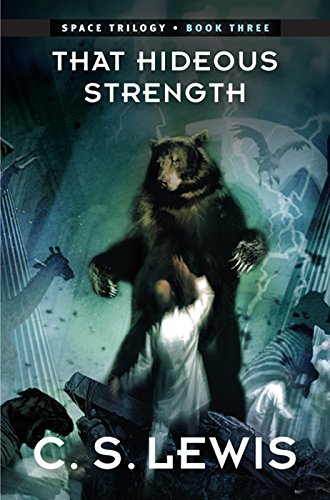
Only the work that Mark Jones singles out for analysis and praise isn’t That Hideous Strength, the climax of Lewis’ science fiction trilogy and a frequent Prometheus Hall of Fame nominee and finalist.
 It’s Lewis’ The Chronicles of Narnia, the beloved and best-selling children’s fantasy series that is now being adapted into an ambitious new film series.
At the core of the fable are four children who are magically transported from the real world into the fictional realm of Narnia in The Lion, The Witch and the Wardrobe, the first of seven portal fantasy novels by the British and Christian author. Entering Narnia, a realm of magic and talking animals, the children face challenges and an ultimate destiny to protect it from evil.
The story’s themes that are “as close to a political manifesto as you will get from this avowedly non-political author,” Jones writes in his Walking Narnia Substack column.
Jones’ key claim emerges when he quotes Lewis:
“Finally, and more generally, the four children ‘stopped busybodies and interferers and encouraged ordinary people who wanted to live and let live’,” he writes.

“This is as neat a definition of small-state libertarianism as you’re likely to encounter in a children’s book.”
Jones develops his argument persuasively.
“In Narnia, functionaries, pen-pushers and administrators are always baddies,” he writes.
“On the last page of The Lion, the Witch and the Wardrobe, we get a brief paragraph about the rule of the four Pevensie children once, with Aslan’s help, they have defeated the White Witch and destroyed the remnants of her army:
And they made good laws and kept the peace and saved good trees from being unnecessarily cut down, and liberated young dwarves and young satyrs from being sent to school, and generally stopped busybodies and interferers and encouraged ordinary people who wanted to live and let live.
“This is a fairytale and so everyone lives happily ever after. Interrogating it is a bit like asking if Prince Charming, shoe fetish and all, would prove to be a prudent manager of the kingdom’s economy or whether the punishment meted out to the evil stepmother in Snow White was commensurate with legal norms operating at the time,” Jones writes.
“In short, you can overthink these things,” he acknowledges.
 But still, Jones makes some perceptive points.
Among other things, he suggests that Lewis wove his fantasy and its themes partly in response to a harsh 1944 British legislative act that raised the school leaving age to 15, with a recommendation that it should be higher.
“For Lewis, this was personal as well as political. As we must keep repeating, no writer, not even Dickens, loathed schools more than he did,” Jones said.

“Here was the state forcing the unwilling or unable to be trapped in those evil places. For ‘young dwarves and young satyrs’, read the young people of Britain who could have been doing apprenticeships or working on the land instead of slaving over algebra or maps of the empire.”
 As in That Hideous Strength and in his nonfiction book The Abolition of Man, Lewis often returned to his anti-statist and libertarian stance highlighting the evils of compulsion and the virtues of freedom.
Read Jones’ full essay to appreciate how he makes his case – and and see if you agree.
Meanwhile, let’s hope that at least some of those libertarian themes emerge clearly in Narnia: the Magician’s Nephew, the new film directed by Greta Gerwig (Barbie) that will be released Feb. 12, 2027 in theaters and IMAX.

ABOUT THE LFS AND THE PROMETHEUS AWARDS
* Join us! To help sustain the Prometheus Awards, honor outstanding freedom-loving fantastical fiction and find fellowship with other fans, join the Libertarian Futurist Society, a non-profit all-volunteer international association of freedom-loving sf/fantasy fans.
Libertarian futurists understand that culture matters. We believe that literature and the arts can be vital in envisioning a freer and better future. In some ways, culture can be even more influential and powerful than politics in the long run, by imagining better visions of the future incorporating peace, prosperity, progress, tolerance, justice, positive social change, and mutual respect for each other’s rights, dignity, individuality and peaceful choices.
* Prometheus winners: For a full list of Prometheus winners, finalists and nominees – including in the annual Best Novel and Best Classic Fiction (Hall of Fame) categories and occasional Special Awards – visit the enhanced Prometheus Awards page on the LFS website. This page includes links to all published essay-reviews in our Appreciation series explaining why each winning work since 1979 fits the awards’ distinctive dual focus on both liberty and literary quality.
* Watch videos of the annual Prometheus Awards ceremonies, Libertarian Futurist Society panel discussions with noted sf authors and leading libertarian writers, and other LFS programs on the Prometheus Blog’s Video page.
* Read “The Libertarian History of Science Fiction,” an essay in the international magazine Quillette that highlights the Prometheus Awards, the Libertarian Futurist Society and the significant elements of libertarian themes and insights in the evolution of the modern SF/fantasy genre.
* Check out the Libertarian Futurist Society’s Facebook page for updates, comments, and links to Prometheus Blog posts.
