
Harry Turtledove’s Between the Rivers, one of this year’s Prometheus Hall of Fame nominees, is suited to libertarian audiences in somewhat the same way as Neal Stephenson’s Baroque Cycle: It neither portrays a free society, nor proposes a path to creating one, but offers a historical perspective on some of the long established elements of freedom as of their first appearance.

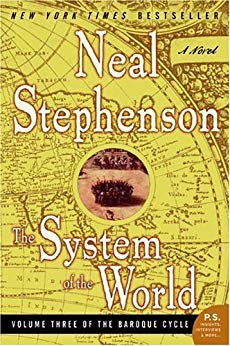
Stephenson’s Baroque Cycle novel The System of the World, the 2005 Prometheus Best Novel winner, is subtle about its fantastic elements (the presence of Enoch Root, also a character in Cryptonomicon, set centuries later, and the strange isotope of gold); Turtledove’s much less so, with active gods monitoring their human worships and wandering about the countryside.
So Stephenson can be read as a secret history, but Turtledove has to be taken as a historical fantasy. But Turtledove makes his historical parallels obvious, in the very title of his book: “Between the Rivers” literally translates the Greek name “Mesopotamia” for the land that was once Sumer, and later Babylonia, and is now Iraq.
Turtledove’s fantastic premise takes off from Julian Jaynes’s “bicameral mind” hypothesis, which suggests that at one time human beings did not have self-awareness or volition, but were dictated to by hallucinated voices, now remembered in legends as gods or spirits.
What if, Turtledove asks, this were not our attempt to rationalize the very different experiences of such people, but were the plain truth? His protagonist, Sharur, and the other people around them, go through their lives surrounded by the spirits of their dead kin, are threatened from time to time by demons, and live in cities each of which is ruled by an actual god, one capable of taking physical form and of punishing disobedience.

However, not all of the gods approach this the same way. The god Gibil, in the city of Engibil, has what we might now call a “laissez faire” attitude: He doesn’t worry much about what his people do, so long as the merchants bring back interesting curiosities for the city’s human ruler to give him. As a result, the people have grown accustomed to making their own decisions. There is a telling moment early in the novel when Sharur and his father and brother talk about something, and cover the faces of their personal figurines of Gibil, not wanting him to listen.
But the other gods, both of the other cities between the rivers, and of the remoter lands that Sharur goes to as head of a trade caravan, look on this unfavorably. Sharur finds himself unable to make any trades, or earn any profits, which leaves him unable to acquire the bride price for the woman he wants to marry—which gives him a personal stake. In the course of the novel, he comes to see larger stakes on the table as well. A conflict that starts out with personal wheeling and dealing grows into war and covert operations.
One one hand, the gods of this world are a natural allegory for kings and states; they oppress their people much as authoritarian regimes do, with powers that no historical despot could dream of until the past century or so. And at one striking point, Turtledove reverses the allegory, when Engibil’s human ruler asserts his authority, and Sharur reflects on not wanting to trade a divine ruler for a human one.

But at a subtler level, Turtledove picks out some notable sources for human independence: scribes and writing, through which legal records can be kept as an independent basis for decisions; trade, which requires travel to remote places, away from the direct supervision of one’s god, and provides a source of wealth that the god doesn’t control and that indeed can tempt the god; and even smithing, a new technology not (at this early date!) the domain of any god.
All of these are tributaries to what will eventually become the stream of human liberty. And that sort of history is relevant to the Prometheus Awards.
The novel’s setting isn’t libertarian yet — Sharur and his family own a slave woman, for example — but it points toward a free society, rather as Stephenson did later with the scientific revolution, steam engines, and the gold standard.

FOR FURTHER READING
* Read Stoddard’s somewhat different but complementary initial review of Between the Rivers, published in 2024 on the Prometheus Blog when Turtledove’s novel was most recently ranked as a Hall of Fame finalist.
* Read Stoddard’s Prometheus Blog appreciation review-essay of Turtledove’s The Gladiator, a 2008 Prometheus Best Novel winner.

* Read Max More’s Prometheus Blog review of Turtledove’s Powerless, a 2025 novel nominated for the next Prometheus Award for Best Novel.
* Read Stoddard’s Appreciation review-essay of Stephenson’s The System of the World, the 2005 Prometheus Best Novel winner.

ABOUT THE PROMETHEUS AWARDS AND THE LFS
* Join us! To help sustain the Prometheus Awards and support a cultural and literary strategy to appreciate and honor freedom-loving fiction, join the Libertarian Futurist Society, a non-profit all-volunteer international association of freedom-loving sf/fantasy fans.
Libertarian futurists understand that culture matters. We believe that literature and the arts can be vital in envisioning a freer and better future. In some ways, culture can be even more influential and powerful than politics in the long run, by imagining better visions of the future incorporating peace, prosperity, progress, tolerance, justice, positive social change, and mutual respect for each other’s rights, human dignity, individuality and peaceful choices.
* Prometheus winners: For a full list of Prometheus winners, finalists and nominees – including in the annual Best Novel and Best Classic Fiction (Hall of Fame) categories and occasional Special Awards – visit the enhanced Prometheus Awards page on the LFS website. This page includes convenient links to all published essay-reviews in our Appreciation series explaining why each of more than 100 past winners since 1979 fits the awards’ distinctive dual focus on both quality and liberty.
* Watch videos of past Prometheus Awards ceremonies, Libertarian Futurist Society panel discussions with noted sf authors and leading libertarian writers, and other LFS programs on the Prometheus Blog’s Video page.
* Read “The Libertarian History of Science Fiction,” an essay in the international magazine Quillette that favorably highlights the Prometheus Awards, the Libertarian Futurist Society and the significant element of libertarian sf/fantasy in the evolution of the modern genre.
* Check out the Libertarian Futurist Society’s Facebook page for comments, updates and links to the latest Prometheus Blog posts.
